
What a plumber can and cannot do about a wet basement
A damp basement is a water-management problem, and plumbing handles one part of it: where water collects, how it is pumped out and where it goes. We install and repair interior drainage, sump pits and pumps, discharge lines and backwater protection on floor drains.
We do not repair foundation cracks, mask or seal walls structurally, or diagnose mold and its health effects. Those belong to foundation or masonry contractors, restoration companies and your doctor. If your basement needs both, we will say so, and we can work alongside the other trade.
Where the water in Bloomfield basements comes from
The Connecticut Insurance Department describes four ways water gets into a basement: water seeping in through the foundation, a failed sump, sewer backup and rising groundwater. Each one needs a different fix, so the first job is to tell them apart. Clear water that appears after rain and rises from the floor edge points to groundwater. Dark, smelly water from a floor drain points to the sewer.
Local conditions raise the stakes. The town's hazard plan names Tunxis Avenue and the Town Center near the library as flood-prone, and Irene in August 2011 and the October 2011 storm both brought federal disaster declarations. About half of Bloomfield's homes were built before 1970, according to the draft town plan, so many basements predate modern drainage practice.
| What you see | Likely source | Plumbing response |
|---|---|---|
| Water along the wall after heavy rain | Groundwater or surface runoff | Interior drain and sump pump, plus downspout routing |
| Water rising up through the floor drain | Sewer or drain backup | Camera inspection and a backwater valve |
| Damp spot under a pipe | Supply or drain leak | Leak repair, not drainage work |
| Sump pit full with the pump silent | Pump failure | Pump repair or replacement |
| Dripping from a ceiling line | Pipe above the ceiling | Leak tracing and pipe repair |
Start with the cheapest fixes outside
Many wet basements improve before any plumber digs. Gutters that overflow, downspouts that dump at the foundation, and soil that slopes toward the wall all send water into the ground next to the house. Those are yard and exterior jobs that you can begin yourself.
Do these before you spend on interior work
They cost little and tell you whether the water is coming from the roof and grade.
- Clear gutters and check that the downspouts empty at least several feet from the wall.
- Make sure the soil near the foundation slopes away from the house.
- Check window wells for debris and standing water.
- Look at where each downspout and sump pump discharge ends. None should connect to a house drain.
- Mark where water first appears and photograph it during and after rain.
- Write down how long after a storm the water arrives, since slow arrival often means groundwater.
Interior drainage that works with a sump pump
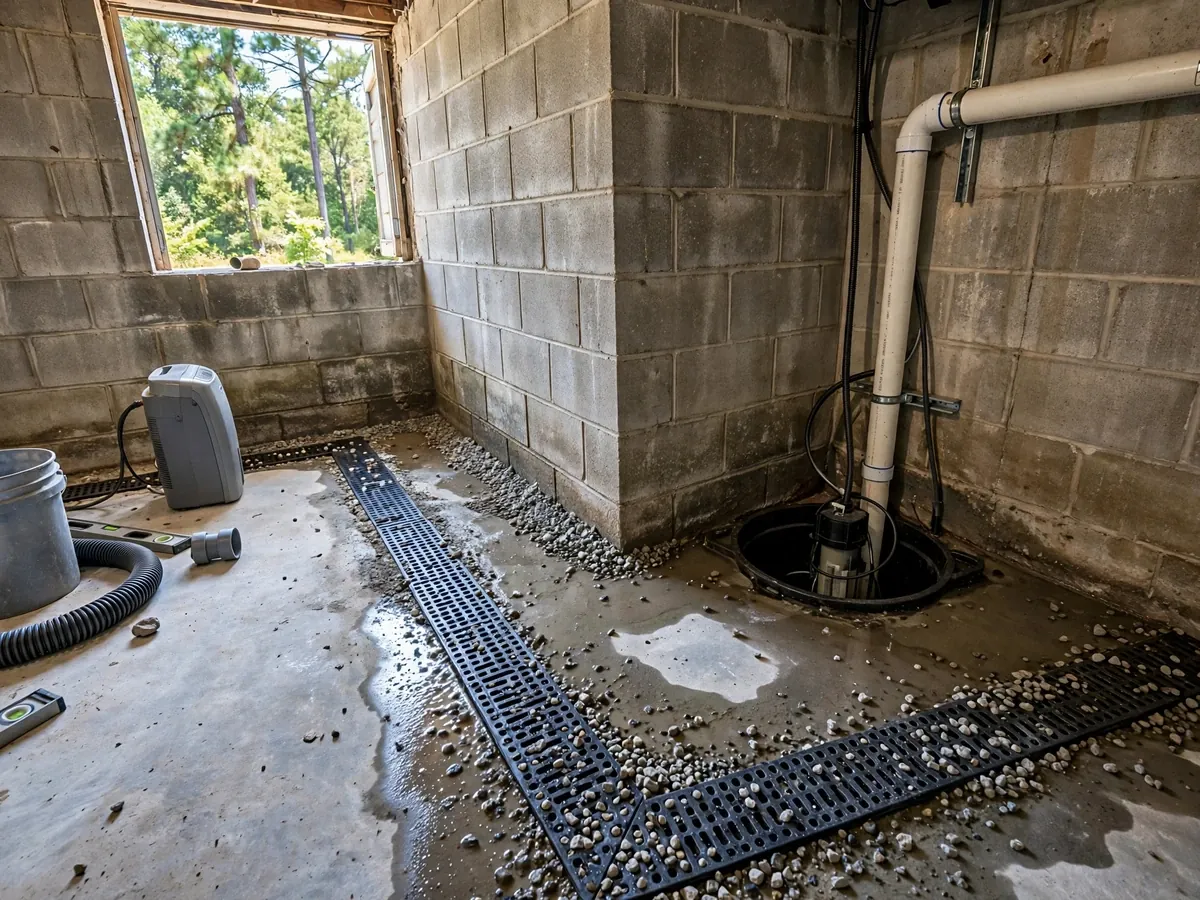
When groundwater is the cause, an interior perimeter drain gives it a path. A drain channel sits along the footing, beneath or beside the slab, and slopes toward a sump pit where a pump sends the water outside. We cut a trench in the floor, set the pipe in stone, then patch the concrete.
This is plumbing-side drainage, and it does not change the structure of the foundation. It manages the water that gets in, rather than stopping it at the wall. If you want that work, our sump pump installation and repair service covers the pit and the pump, and the same dispatch line covers the drain.
Find the source
We watch where water enters, test the floor drain and look at the sump pit, then confirm whether groundwater, a leak or the sewer is behind it.
Choose the system
Options run from a single sump pit to a full perimeter drain, with or without battery backup, based on how much water arrives.
Install and connect
We cut the slab, set drain pipe and the pit, connect the pump and run the discharge line outdoors.
Test and explain
We run water through the system, check the float and the check valve and show you how to test it each season.
Planning a drier basement
If water keeps returning and you want a plan, call Call (860) 397-8103. We will ask where and when water appears and book an inspection visit. Same-day appointments are available when the schedule allows.
Sending water where MDC allows
MDC's sewer ordinance bars storm water, foundation drains, groundwater seepage and roof drains from the sanitary sewer. So a basement drainage system in Bloomfield must discharge outdoors, to vegetation, a waterway or storm piping, and never to a house drain. MDC lists downspouts, yard drains and pumps tied to the wrong pipe among the ways rain gets into its sewers, and it puts about a quarter of Bloomfield's sewer pipe past 50 years of age.
A program worth asking MDC about
MDC operates a Backwater Valve Program for homes with wet-weather basement flooding. It starts with a plumbing survey of the basement drain piping, and some properties may qualify for work at no cost. MDC's page does not list the towns it covers, so call (860) 278-7850 ext. 3123 and ask whether your address qualifies.
If your basement water comes up through a floor drain, tell the caller that when you phone MDC. It shapes what they offer.
Backwater valves and floor drains
When a sewer fills during heavy rain, wastewater can push back up through the lowest drain in the house. A backwater valve on the drain line lets water flow out and closes when flow reverses. It does not stop groundwater, so we pair it with a camera inspection when a sewer problem is suspected. Our sewer camera inspection shows whether the lateral is cracked or blocked.
The owner owns the lateral to the street main, and MDC maintains the main. A backwater valve is new drain work in many cases, so we confirm the permit requirement with the Building Division at 860-769-3516 before starting.
What drives the cost of basement drainage work
A basement is rarely like the one next door. These factors decide the scope.
Ask your insurer what is covered. Under the state insurance department's guidance, a standard homeowners policy leaves out flood, sewer backup often needs an add-on, and a new flood policy usually carries a 30-day wait.
Call (860) 397-8103 to discuss your basement. We give you a clear price before work starts.
What waterproofing will not do
No drain system guarantees a basement stays perfectly dry in every storm, and we will not promise that. Interior drainage reduces the chance of standing water, and a good pump with backup power handles most inflow. A very high water table or a flooded street can overwhelm any system. Keep valuables off the floor and ask your insurer about coverage.
If a pump has failed and water is rising now, go to our guide on sump pump work. For leaks from pipes rather than from the ground, leak detection is the right service. We also work in Hartford.
Basement waterproofing questions
No. Foundation and masonry repair belong to other trades. We handle drainage, sump pits and pumps, discharge lines and backwater protection, and we can coordinate with a foundation contractor.
No. We do not diagnose mold or health effects. If you see growth or have symptoms, ask your doctor and a licensed mold professional. We fix the plumbing that lets water collect.
Not exactly. An interior drain manages water that has entered the ground around the foundation by giving it a path to a sump. It does not stop water at the wall. It is a common, practical answer to groundwater.
Outdoors, away from the foundation, to vegetation, a waterway or storm piping. MDC's sewer ordinance bars storm water and groundwater from the sanitary sewer, so it must never connect to a house drain.
Adding or altering drain piping needs a plumbing permit in Bloomfield. Call the Building Division at 860-769-3516 to confirm what your project needs.
For an interior perimeter drain, yes. We cut a narrow trench, install the drain and patch the concrete. A single pit and pump needs a smaller opening.
MDC has a Backwater Valve Program for wet-weather flooding that starts with a drain survey. Call (860) 278-7850 ext. 3123 to ask if your address qualifies.