
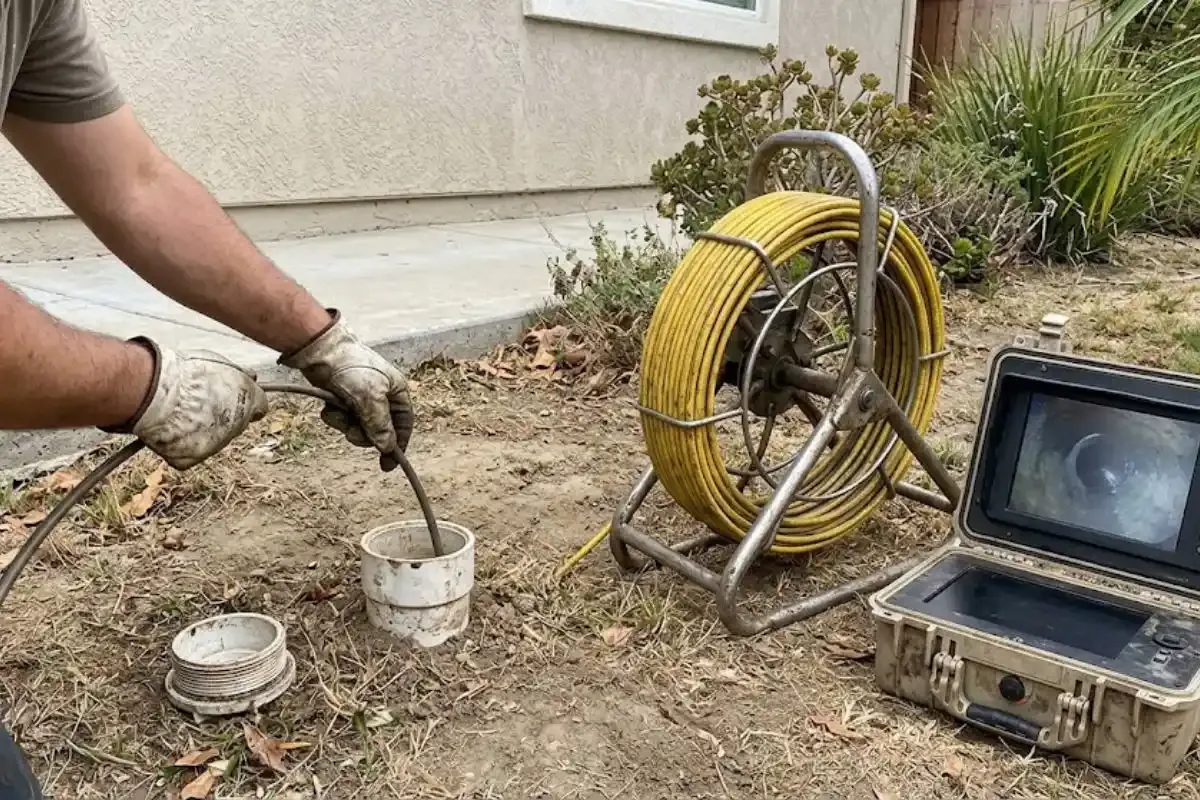
The sewer lateral is out of sight, and a problem in it can cost far more than a worn faucet. A camera inspection takes a plumber a short visit and gives you footage of the inside of the pipe. We book inspections at times that suit buyers, sellers and owners, and same-day appointments are possible when the schedule allows.
A sewer inspection, often called a sewer scope, uses a waterproof camera on a flexible rod fed through a cleanout. The plumber watches a live screen, notes the distance to anything unusual, and records the run. The result is a picture of the pipe's walls, joints and slope.
Buying a house? Look at the pipe before you close
A home inspector checks what can be seen and touched. A general inspection does not normally put a camera in the underground sewer line, and the lateral is the part of the house you cannot see from the basement.
In an MDC town like Bloomfield, the owner is responsible for the entire length of the house connection under MDC's sewer ordinance. If you buy a house with a failing lateral, that repair becomes yours. A camera visit before closing lets you ask the seller to fix it, adjust terms, or at least plan for it.
According to MDC, its Sewer House Connection program has offered partial reimbursement for a self-hired camera inspection that follows its permit process, so call MDC before you book a scope.
Timing matters. Ask your agent how long your contract allows for inspections, then book the sewer scope early, since a clog or a cleanout buried under a deck can add steps. If the seller's cleanout is hard to reach, tell us beforehand.
What the camera can show
Cracks and breaks
Hairline cracks, circumferential breaks and missing pipe sections show as dark gaps, with soil or water visible behind them.
Root intrusion
Fine hair-like roots through joints, or thick mats that narrow the pipe, tell you how far the invasion has gone.
Bellies and sags
A low spot where water stands after a flush means solids collect there. It often causes repeat clogs.
Offset or separated joints
Pipe sections that have shifted show a lip or gap where the lens catches the step.
Scale, grease and debris
Heavy buildup shows how much of the pipe diameter is still open and whether cleaning would help.
Collapse or obstruction
The camera stops where the pipe is crushed, blocked by a foreign object, or full of silt.
How an inspection works
Find the way in
The plumber looks for a cleanout, typically in the basement or near the foundation. Without one, access may be through a toilet or a roof vent.
Feed the camera
The camera head moves toward the street while the plumber watches the screen and notes the footage count. Standing water or debris can limit what is visible.
Locate and mark
A transmitter in the camera lets the plumber trace the pipe from above and note depth and path. This helps if repair planning, excavation or a nearby build-out is on the table.
Review what was seen
You get a plain account of the findings, with distances, and a recommendation. Anything that looks serious is described plainly, without pressure to act.
Turning footage into a decision
| Finding | What it usually means | Sensible next step |
|---|---|---|
| Clean pipe, good slope | Line is in working order today | Keep the footage for your records |
| Roots at a joint | A small opening that will keep letting roots in | Cleaning now, repair of the joint later |
| Belly or sag | Water and solids will keep collecting | Monitor, or plan section replacement |
| Cracked or broken pipe | Structural damage that will get worse | Repair or replacement options |
| Collapse or full blockage | Line cannot work as built | Prompt repair planning |
If the footage shows roots, grease or scale, sewer line cleaning may restore flow. If it shows structural damage, the options are laid out on the sewer line repair page. Not every finding needs action. A camera that shows a clean pipe is a useful result too.
Bloomfield, CT: call MDC before hiring for the lateral
MDC maintains the main sewer and notes that the owner is responsible for the entire house connection. MDC's Sewer House Connection Program has offered to cover or reimburse part of rodding or camera work on eligible properties. The program has its own steps, including an MDC permit and an on-site inspector for self-hired contractors.
That means a scope done outside that process may not qualify for any help. Call MDC Utility Services at 860-278-7850 ext. 3780 on weekdays before you book, and ask whether your property is eligible. If you only want a quick pre-purchase scope, you may decide to proceed without it.
Closing date set or a project coming up?
Call with the address and your timeline. We will explain what the camera visit covers and find a time that fits your inspection window.
When an owner should schedule one
- Before buying a house, especially an older one with its original lateral.
- After repeated clogs in the main line, or a cable that stops short.
- When a sewage smell shows up in a bathroom or basement and the P-trap is full.
- Before a basement bathroom, addition or landscape project that sits over the sewer path.
- When a yard patch stays soggy for no obvious reason.
- After a backup is cleared, to see why it happened.
Bloomfield's proposed town plan says about 52 percent of local homes were built before 1970. Laterals installed that long ago have had decades of freezing winters and tree growth, so a camera look is a reasonable step on an older house.
What a sewer camera cannot tell you
A camera shows the inside of the pipe, not the soil around it. It does not measure how much longer a pipe will last, and standing water can hide a low spot. It also cannot see past a full blockage until the line is cleared.
If the property uses a septic system, a lateral scope covers only the pipe to the tank. The tank and leach field need a different kind of inspection, and the West Hartford-Bloomfield Health District reviews septic plans for both towns. We tell you before booking if the footage cannot answer your question.
What shapes the cost of a sewer inspection
We state a clear price before work starts. These points move the number.
Ask your insurer what your policy covers for sewer lines. Many homeowners policies cover sudden and accidental damage but not age or root intrusion, and sewer backup often needs a separate endorsement.
Call with the address and your closing or project timeline and we will explain what a visit includes.
We schedule inspections for buyers in Simsbury and nearby towns as well as in Bloomfield.
Sewer inspection questions
Usually not. A general inspection covers visible plumbing and does not normally put a camera into the underground lateral. If you want the line checked, ask for a separate sewer scope and book it early in your inspection period.
A typical lateral takes a short visit once the plumber has access. Debris, a missing cleanout or a long run can extend it. The plumber will tell you what is likely when you call.
Often yes. A transmitter in the camera head lets the plumber trace the pipe from above and mark its path and depth. This is useful before landscaping, additions or a contractor's build-out.
The property owner is responsible for the entire lateral under MDC's ordinance. In a sale, who pays is a matter for the buyer, seller and their agents. MDC's Sewer House Connection Program may help with some costs, so check eligibility with MDC first.
The camera covers the buried pipe, not a fixture trap. A dry trap or a small leak under a bathroom is checked at the fixture. If the smell persists after the trap is sorted, the camera may help rule out a damaged line.
Ask when you book. Saved footage and notes are useful for repair planning, negotiating with a seller or keeping a record of the pipe's condition.