
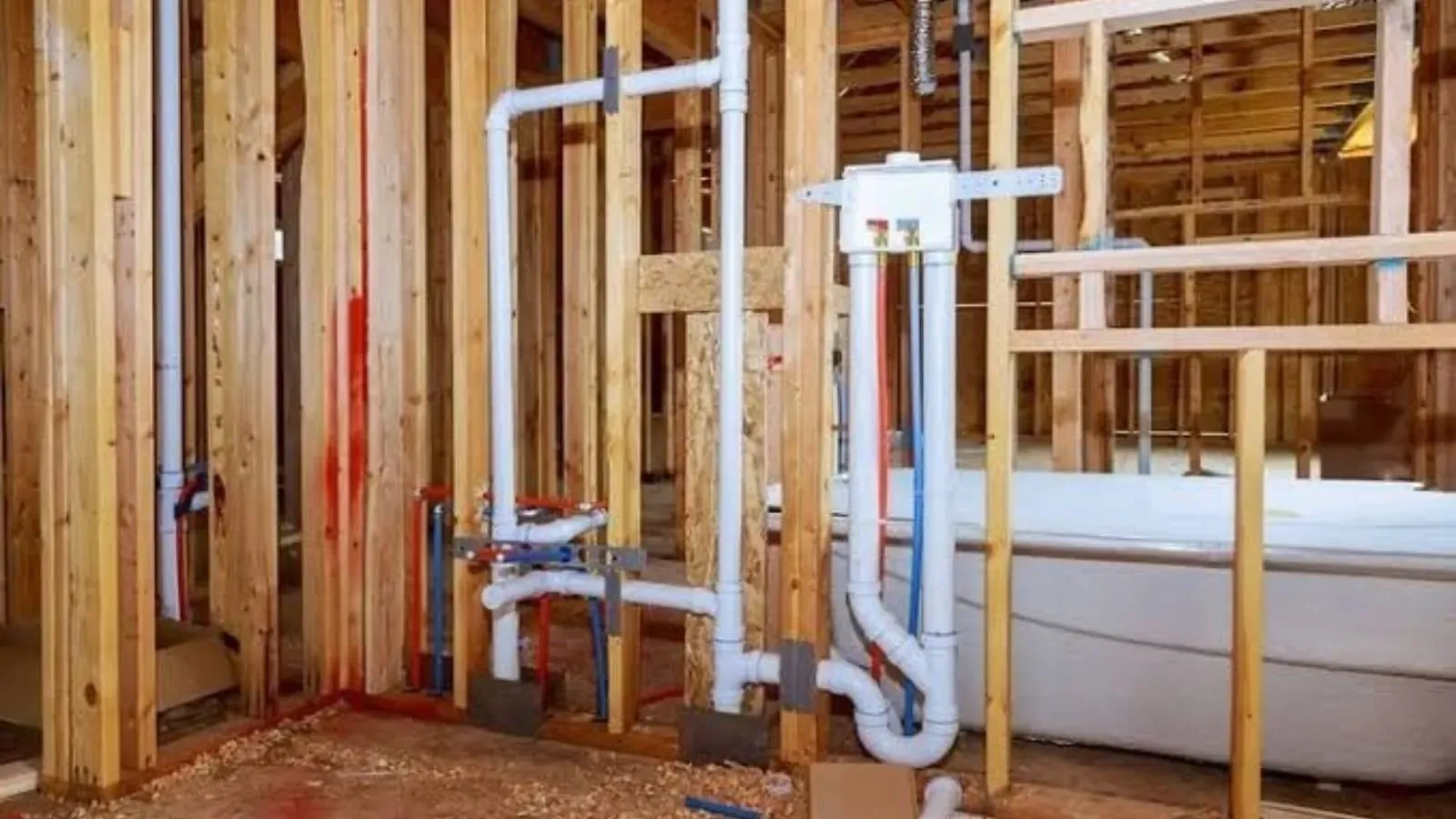
Plumbing installation means putting new supply lines, drains, vents or fixtures into a building, as opposed to repairing what is already there. It ranges from a single new kitchen faucet to a full bathroom in a former closet. The first question on every job is what has to move, because moving pipe is what turns a quick swap into a permitted project.
Start with the permit question
Bloomfield's Building Division enforces the 2022 Connecticut State Building Code, which builds on the 2021 International Plumbing Code (IPC). Plumbing work has its own trade permit application, separate from the building permit. Per the town, most permits are issued about 10 days after plans are submitted, and inspections are scheduled 48 hours ahead.
The town's exempt-work list covers clearing clogs, repairing leaks in pipes, valves and fixtures, and removing and reinstalling a toilet, provided valves, pipes or fixtures are not replaced or rearranged. Adding, altering, replacing or relocating supply or drain piping is not exempt. A new bathroom, a moved sink or a relocated shower drain therefore needs a permit and an inspection. Call 860-769-3516 to confirm what your job needs.
Why the plan decides the schedule
A permit, an inspection window and any wall repair afterward all fit around the plumbing, not the other way around. If you are also hiring a tile setter, carpenter or electrician, tell us their dates early.
Ask each trade who is pulling which permit. Plumbing and electrical are separate trades under Connecticut law, and a tankless or garbage disposal install can involve both.
Fixtures we install
Sinks and faucets
Kitchen, bath and utility sinks, with new shutoff valves and supply lines so the old corroded ones do not get reconnected.
Toilets
Flange check, new seal, level set and a tested flush. Our toilet repair and installation page covers the details.
Showers and tubs
Valve and trim, drain, and the connection to your existing wall layout or a new one.
Outdoor faucets
Hose bibs for a garden, garage or side yard, with a shutoff inside so you can drain them for winter.
Appliance hookups
Dishwashers, ice maker lines, washing machine boxes and utility sink drains.
Water heaters and disposals
Handled as their own projects. See water heater installation for tanks and tankless units.
Adding a bathroom or moving a shower
A new bathroom needs three things from the plumber: hot and cold supply to each fixture, a drain that slopes to the main line, and a vent so the traps do not siphon. Where the existing drain is far away or below the sewer line, as in a basement, the drain may need a sewage ejector, which is its own plumbing job and a different machine from a sump pump.
Moving a shower is similar. Replacing a defective concealed trap or drain with new material counts as new work in Bloomfield, so the same permit rules apply. Shower valve and drain size requirements come from the adopted code, and we confirm them against the current edition before we order parts.
What the install process looks like
Walk the job
We look at the space, the shutoff locations, the nearest drain and vent, and the fixtures you picked.
Plan and permit
We list what moves, call the Building Division as needed and schedule the plumbing rough-in inspection.
Rough-in and test
We run supply, drain and vent, pressure-test the lines and let the inspector see them before walls close.
Set fixtures and finish
After the finish trades, we set the fixtures, test for leaks under pressure and walk you through the shutoffs.
Planning a bathroom or a fixture swap?
Call us during business hours with the room, the fixtures you have in mind and your timeline, and we can book a same-day appointment when available to walk the space.
Choosing fixtures before the plumber arrives
- Keep the manufacturer's rough-in sheet. It tells us exactly where each supply and drain must land.
- Buy the shower valve and trim as a matched set, since valve bodies are set inside the wall.
- Measure toilet rough-in from the finished wall to the center of the floor bolts.
- Check that the faucet fits the sink's hole count before you carry it home.
- Ask for the installation manual to stay with the box, because warranties often depend on following it.
Water quality matters less here than in many regions. MDC states its water is soft, about 15 mg/L or 1 grain per gallon, so finishes and aerators are not usually fighting heavy scale. You can still use faucet and sink repair later if a part wears out.
New piping versus working with what you have
| Existing condition | Install on it | Replace first |
|---|---|---|
| Shutoff valves under sinks | Move freely and hold tight | Seized, weeping or green with corrosion |
| Supply pipes at the new fixture | Sound, with no visible pitting | Pitted, leaking or too small for the added fixture |
| Drain at the new location | Right slope and size | Wrong slope, cracked or too far from the stack |
| Wall framing | Space for the new pipe and valve | Needs opening and patching to fit the rough-in |
If the old supply piping is the real problem, adding a fixture to it only moves the trouble. In that case we may recommend repiping before or with the installation.
What drives plumbing installation cost
A written plan matters more than any average, because the factors below differ house to house.
Ask your insurer whether a renovation affects your policy. Homeowners coverage usually addresses sudden and accidental damage, not leaks from poor workmanship over time.
Call to describe the project and we will give you a clear price before work starts.
We take installation projects in Simsbury and other nearby towns as well.
Plumbing installation questions
The town's exempt list covers repairing leaks in fixtures and removing and reinstalling a toilet if nothing is replaced or rearranged. Swapping in a new fixture is not clearly addressed, so call the Building Division at 860-769-3516 before you start.
Yes. Adding or relocating supply or drain piping is not exempt, so plumbing needs its own trade permit and an inspection. Per the town, permits are generally issued about 10 days after plans are submitted.
Yes. Bring the model number and keep the rough-in sheet. We will tell you before the visit if a part is missing or the fixture does not fit your layout.
Connecticut's eLicense lookup lets you search by name or business. P-1 and P-2 are the unlimited plumbing contractor and journeyperson licenses, and P-6 and P-7 are limited to sewer, storm and water lines.
Usually. Share dates for tile, drywall and electrical, and we place the rough-in and fixture setting around them, leaving time for the inspection.
Yes. Older homes often need updated shutoffs or drain sections first. Basements may need a sewage ejector, and we explain that before we order equipment.