
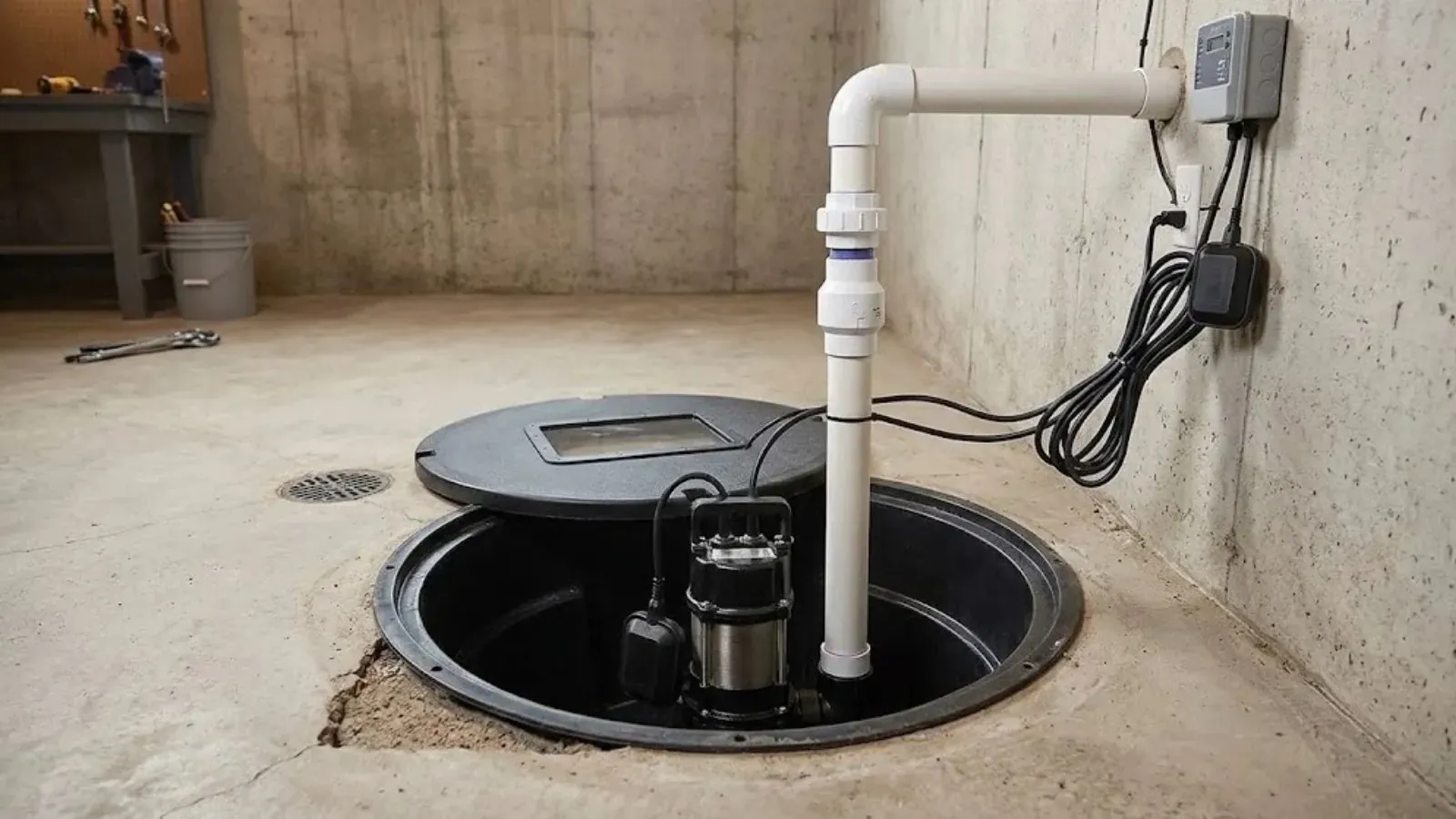
If the pump is not running and the pit is filling
A dead sump pump during a storm is an emergency, because groundwater has nowhere to go but the floor. Call our 24/7 line at once. Then stay out of standing water that could touch outlets, a power strip or the panel, and unplug the pump only if the cord is dry and reachable.
- Check that the pump is plugged in and the GFCI outlet has not tripped. A tripped outlet is the simplest cause and takes seconds to reset.
- Lift the float switch gently. If the pump starts, the float is stuck or tangled, and the pump may be fine.
- If the pit is full and the pump hums but moves no water, the check valve or discharge line may be blocked.
- Move boxes, laundry and electronics above the water line.
- Shut off power to the basement circuit if water is near outlets, and do not wade in to do it.
- Call (860) 397-8103 and describe the sound the pump makes, or the silence.
A wet basement in Bloomfield is a drainage question
The town's hazard plan lists Tunxis Avenue and the Town Center area near the library as flood-prone, and two storms in 2011 (Irene in August and a severe October storm) each became federal disasters. Not every basement sits in a mapped flood area, but groundwater and runoff reach many homes when the ground is saturated.
A sump pump collects water that rises under or beside the foundation in a pit and pushes it out before it reaches the floor. It works only if power, float, pump and discharge all work together. Our job is to make that chain dependable.
Why sump pumps stop when you need them most
Power loss
The same storm that raises the water table often knocks out power. A pump without battery or water-powered backup stops with the lights.
Stuck float switch
A float jammed against the pit wall or tangled in its own cord never signals the pump to run.
Failed check valve
If the valve in the discharge line sticks or fails, water falls back into the pit and the pump cycles on and off constantly.
Burned-out motor
Pumps that run for years in silt, or that were undersized from the start, wear out. A pump that runs nonstop in dry weather is a warning.
Frozen or clogged discharge
A discharge line that dumps near the foundation can freeze in winter or clog with debris, leaving the pump pushing against a plug.
Pit problems
A pit with no lid, or one full of sediment, can jam the float and let in debris that destroys the impeller.
Pit full, pump silent
Water in a basement does not wait for office hours. Call Call (860) 397-8103 and tell us how deep the water is. We offer same-day appointments when the schedule allows, and we take night and weekend calls.
When we repair and when we replace
A pump less than a few years old with a stuck switch or bad check valve is usually worth repairing. A pump with a seized motor, a cracked housing or an undersized rating is usually not. We test the pump under load, look at the pit and the discharge and give you our recommendation.
When we replace, we match the pump to the water volume and the vertical lift to the discharge point. A pump that cycles too often or struggles uphill burns out early. We also check that the pit is deep enough to give the pump time to rest between cycles.
Where the water goes after the pump
MDC's sewer ordinance bars storm water, foundation drainage and groundwater seepage from the sanitary sewer. Its Backwater Valve page names a sump pump as the long-term fix for groundwater and says the discharge belongs on vegetation, a waterway or storm piping. So a sump pump in Bloomfield must discharge outdoors and away from the foundation, and never into a house drain.
About a quarter of Bloomfield's sewer pipe is more than 50 years old, MDC reports, and rain finds its way in through cracks, laterals, downspouts and pumps tied to the wrong drain. If your pump currently ties into a drain, tell us. We will explain how to reroute it, and what MDC's Backwater Valve Program, which covers wet-weather basement flooding, may offer. Ask MDC whether your address qualifies.
| Question | Sump pump | Sewage ejector |
|---|---|---|
| What it moves | Groundwater and runoff from the pit | Wastewater from a basement toilet, sink or shower |
| Where it sends it | Outdoors, away from the house | Up to the home's sewer line |
| Pit | Open or lidded pit near the foundation | Sealed and vented pit |
| Typical sign of trouble | Water on the floor in a storm | Gurgling, odor or backup from basement fixtures |
| Permit | Ask the Building Division if drain piping is altered | Altering drain piping needs a plumbing permit |
Sewage ejector pumps and basement bathrooms
A basement bathroom lower than the sewer line needs an ejector pump to lift waste up to the main drain. When it fails, toilets stop flushing, a smell appears or sewage rises in the pit. Turn off power to the pump and stop using the bathroom. Sewage is a health risk, so avoid contact and do not try to clear it yourself.
We can replace the pump, repair the check valve or install a new system. The owner is responsible for the lateral running to the street main, so a backup that affects every fixture may point to the lateral instead. In that case our sewer line repair team or a sewer camera inspection comes next.
Making the system dependable
Sump pump upkeep for Bloomfield basements
Check these before the wet season and after any major storm.
- Pour a bucket of water into the pit and confirm the pump starts, empties it and shuts off.
- Make sure the pump is on its own GFCI-protected circuit.
- Check that the float moves freely and nothing leans on the cord.
- Clean the pit of silt, stones and debris at least once a year.
- Walk the discharge line and confirm it is clear and runs away from the house.
- Consider a battery backup if outages are common on your street.
What shapes the cost of sump pump work
A swap and a new system are different jobs. These are the factors.
Ask your insurer before you count on coverage. According to the state insurance department, flood damage falls outside a standard homeowners policy, sewer backup often needs its own coverage, and a new flood policy usually waits 30 days to start.
Call (860) 397-8103 and we will give you a clear price before work starts.
A sump pump is one piece of keeping water out. Drainage outside, gutters and grading matter too, as our basement waterproofing page explains. We serve West Hartford homes as well.
Sump pump questions
Yes. Call (860) 397-8103 any hour. The line is staffed 24/7 and we dispatch for failed pumps and rising basement water, with same-day appointments for lesser problems when the schedule allows. Stay out of water that could reach outlets.
A pump that never stops may be fighting a high water table, a failed check valve, a stuck float or an undersized impeller. If the pit is dry and the pump still runs, the float is probably stuck.
No. MDC's sewer ordinance bars storm water, foundation drainage and groundwater from the sanitary sewer. The discharge should go outdoors, away from the foundation.
If power outages come with storms on your street, a battery backup keeps the pump running. We can size one for your pump and pit.
A sump pump moves groundwater out of a pit. A sewage ejector lifts wastewater from basement fixtures up to the main drain. They use different pumps and different pits.
Ask your insurer. Flood is usually excluded from a standard policy and sewer backup often needs its own coverage, the state insurance department says. Read your policy and keep receipts and photos.
There is no fixed date. Test it each season and replace it when it struggles, short-cycles or fails the bucket test.