
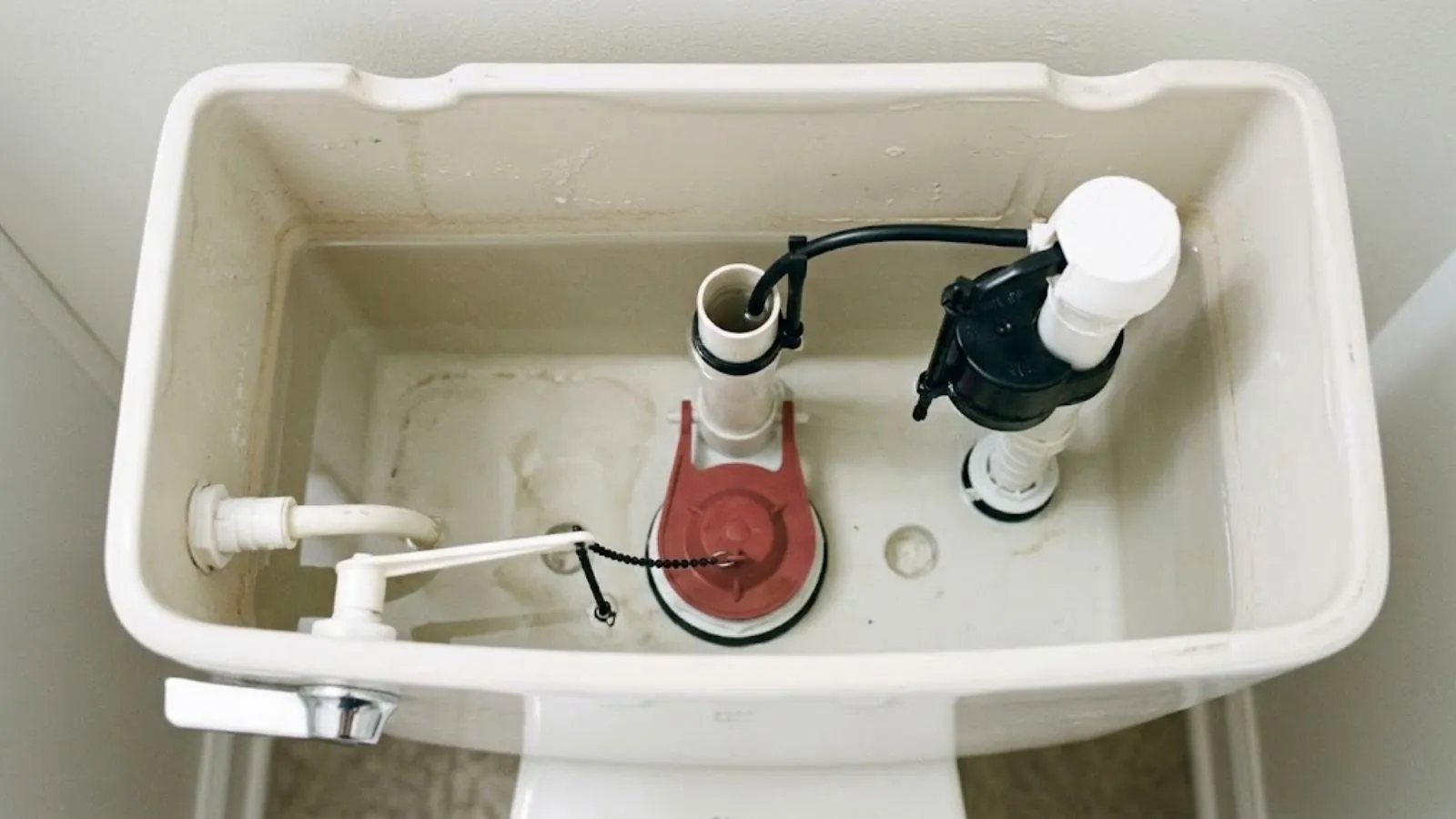
When an overflowing toilet is an emergency
A bowl that keeps rising toward the rim is a plumbing emergency, and our line is open 24/7 for that call. While you wait, turn the oval valve on the wall behind the toilet clockwise until it stops. If water keeps coming, lift the tank lid and press the rubber flapper down, then close the main shutoff where the line enters the house.
Stay out of the room if the water is dark or smells like sewage. That usually means the drain behind the toilet is blocked, not just the bowl, and the water carries bacteria. Active overflows and floor leaks are what the after-hours line is for, and a slow base leak can often be booked as a same-day appointment when available.
Water around the base
A failed wax ring, loose closet bolts or a cracked bowl. If the toilet rocks when you sit, the seal is probably already broken.
Tank that keeps running
A worn flapper, a stuck fill valve or a bent chain. The hissing you hear is water leaking into the bowl all night.
Weak or failed flush
A chain with too much slack, clogged rim jets or a partial clog deeper in the trap. A snapped handle arm is common on older one-piece units.
Sweating or dripping tank
Condensation on cold days looks like a leak. A drip from the bolts or the supply connection is a real one.
Bowl that refills by itself
The tank is losing water past the flapper, so the fill valve tops it up every few minutes. It is the quietest way to waste water.
Gurgling or backing up
Gurgling plus slow drains in other fixtures points past the toilet to the main drain line or the sewer lateral.
What a quiet leak does to your MDC bill
Bloomfield gets its water and sewer service through the Metropolitan District Commission (MDC), and every unit that passes the meter is billed whether you used it or not. The MDC leak page says toilets cause about 95 percent of household leaks. A flapper that never quite seals will not flood your floor, so it hides until the bill arrives.
MDC bills in units of 100 cubic feet, roughly 748 gallons each. EPA estimates the average home loses more than 9,300 gallons a year to leaks. A toilet that refills a few times an hour can beat that number on its own.
Run the dye test before you call
MDC suggests dropping a little food coloring in the tank and waiting 15 to 20 minutes without flushing. Color in the bowl means the flapper or flush valve seat is leaking. Flush afterward so the dye does not stain the tank.
If the bowl stays clear, the leak is likely at the supply line, the tank bolts or the floor seal, and we look there next.
How we trace a toilet problem
Look at the water
Clear water from the tank and dirty water from the drain call for different fixes, so we check which one you have first.
Check the supply side
We test the wall shutoff, the braided supply line and the fill valve for drips, and we replace a seized valve so you are not stuck again next time.
Test the flush mechanism
Flapper, chain length, handle arm, overflow tube and fill height each get checked, because one worn part often hides a second.
Check the seal and the drain
We rock the bowl, inspect the flange and wax ring, and use a closet auger on the trap. A drain camera comes out when the trouble is past the toilet.
Repair or replace the toilet
| Situation | Usually repaired | Usually replaced |
|---|---|---|
| Running or phantom flushing | Flapper, fill valve or chain swap | Cracked tank or corroded flush valve seat |
| Water at the base | New wax ring and closet bolts | Cracked porcelain at the base or a warped flange that cannot be fixed |
| Weak flush | Cleaned rim jets or a cleared trap | Chronic clogs from an old, poorly designed bowl |
| Wobbling bowl | Shim and reset on a sound flange | Floor rot that needs the toilet pulled for subfloor repair |
| Hairline crack in tank or bowl | Rarely | Almost always |
Toilet installation in Bloomfield, CT
Most toilet installation calls start with a repair that has run its course. We pull the old unit, scrape the flange, check that the closet bolts and flange sit level, set a new wax ring or seal, and connect a new supply line and shutoff valve. The new bowl is leveled, bolted down evenly and caulked at the floor.
- Measure the rough-in, the distance from the finished wall to the center of the floor bolts, before you buy a bowl.
- Choose round or elongated, one-piece or two-piece, based on the space and who uses the bathroom.
- Tell us if the floor feels soft near the toilet. We check for rot before we set anything new.
Permits come up here, so we are careful. Bloomfield's exempt-work list says removing and reinstalling a toilet needs no permit as long as valves, pipes or fixtures are not replaced or rearranged. A brand-new fixture in the same spot is not clearly covered, and moving a toilet means altering drain piping, which is not exempt. The Building Division at 860-769-3516 can answer for your job. Larger bathroom projects are covered under plumbing installation.
The 2022 Connecticut State Building Code that Bloomfield enforces is built on the IPC, so relocating a toilet's drain falls under standards that call for a permit.
Toilet overflowing or leaking onto the floor?
Close the wall valve while you dial, then tell dispatch whether the water is clear or dirty. That one detail decides what we load on the truck, and the line is staffed all night.
Repeat clogs, wipes and the sewer lateral
Plain toilet paper is the only thing that belongs in the bowl. EPA says wipes, floss, paper towels and cat litter should go in the trash, even when the package says flushable. MDC's sewer ordinance also bars rags and anything likely to cause an obstruction, so a wipe that jams your toilet can jam the neighborhood line too.
A toilet that clogs again within days, gurgles, or sends water up a floor drain usually has a problem past the bowl. In MDC territory the owner is responsible for the sewer lateral, the pipe from the house to the main in the street, while MDC maintains the main.
If you suspect the lateral, MDC asks you to call its Command Center at (860) 278-7850, press 1, before any work starts. Our drain cleaning and sewer camera inspection pages explain what we do after that call.
A sewage backup is a health matter. MDC advises that you stop using fixtures, avoid contact with the water and disinfect anything it touched. Skip strong chemical openers in the bowl. They rarely clear a toilet clog, and they put harsh liquid in a trap that a plumber then has to work around.
Handles, fill valves and parts that no longer exist
A snapped flush lever on an older one-piece toilet, a fill valve that will not unscrew, or a tank that has to be rebuilt around discontinued parts are common reasons for a call. We match universal flush valves and fill valves to the tank when we can. When the manufacturer no longer makes the part, a new toilet costs less over time than a stack of patches, and we say so plainly.
If the leak is in a tub or shower beside the toilet, or you see a ceiling stain below the bathroom, send us that detail too. It may need leak detection rather than a flange repair.
While you wait for the plumber
These steps limit damage and keep the visit short.
- Close the shutoff valve behind the toilet by turning it clockwise.
- Lift the tank lid and push the flapper down if water keeps running.
- Do not flush again or run showers, the washer or the dishwasher.
- Lay towels at the base and move rugs and cardboard off the floor.
- Switch off power to any outlet or fan near standing water if you can reach the breaker without stepping in it.
- Keep children and pets out if the water is dirty, and wash hands after cleanup.
- Note whether the water was clear, cloudy or dark, and which other drains gurgle.
What drives toilet repair and installation cost
A flapper swap and a bowl replacement are very different jobs. These factors decide where yours lands.
Ask your insurer how your policy treats toilet overflows. Homeowners policies usually cover sudden and accidental water damage, not wear or a leak that went on for months, and sewer backup often needs a separate endorsement.
Call the 24/7 line with what you see and we will explain the clear price before work starts.
Nearby towns we serve
Toilet calls also come in from West Hartford, Windsor and the north end of Hartford, and the same dispatch line covers them.
Toilet repair questions
Yes. The line runs 24/7, including holidays, and an overflowing toilet or a leak through a ceiling is exactly what it is for. Shut the wall valve behind the toilet before you call and tell us whether the water is clear or dirty. A slow leak that can wait is usually a same-day appointment when available.
Usually the flapper no longer seals, the chain is too tight or too loose, or the fill valve will not shut off. The dye test above tells you which side is leaking. Replacing the part is typically a short visit.
Many homeowners do, and Bloomfield's exempt-work list covers removing and reinstalling a toilet if no valves, pipes or fixtures are replaced or rearranged. Call the Building Division at 860-769-3516 if you are unsure, and call a plumber if the flange is damaged or the floor is soft.
We advise against it. Chemical openers seldom clear a toilet, and MDC's sewer rules bar substances that damage sewer material or have extreme pH. A closet auger is the safer first step.
If only one toilet is slow, start with a plumber. If several fixtures gurgle or sewage comes up a floor drain, call the MDC Command Center at (860) 278-7850, press 1, because the main may be involved.
Yes. We remove the old toilet, check the flange, set the new bowl, connect the supply and test the flush. Bring the model if you already bought one, or ask us what fits your rough-in.