
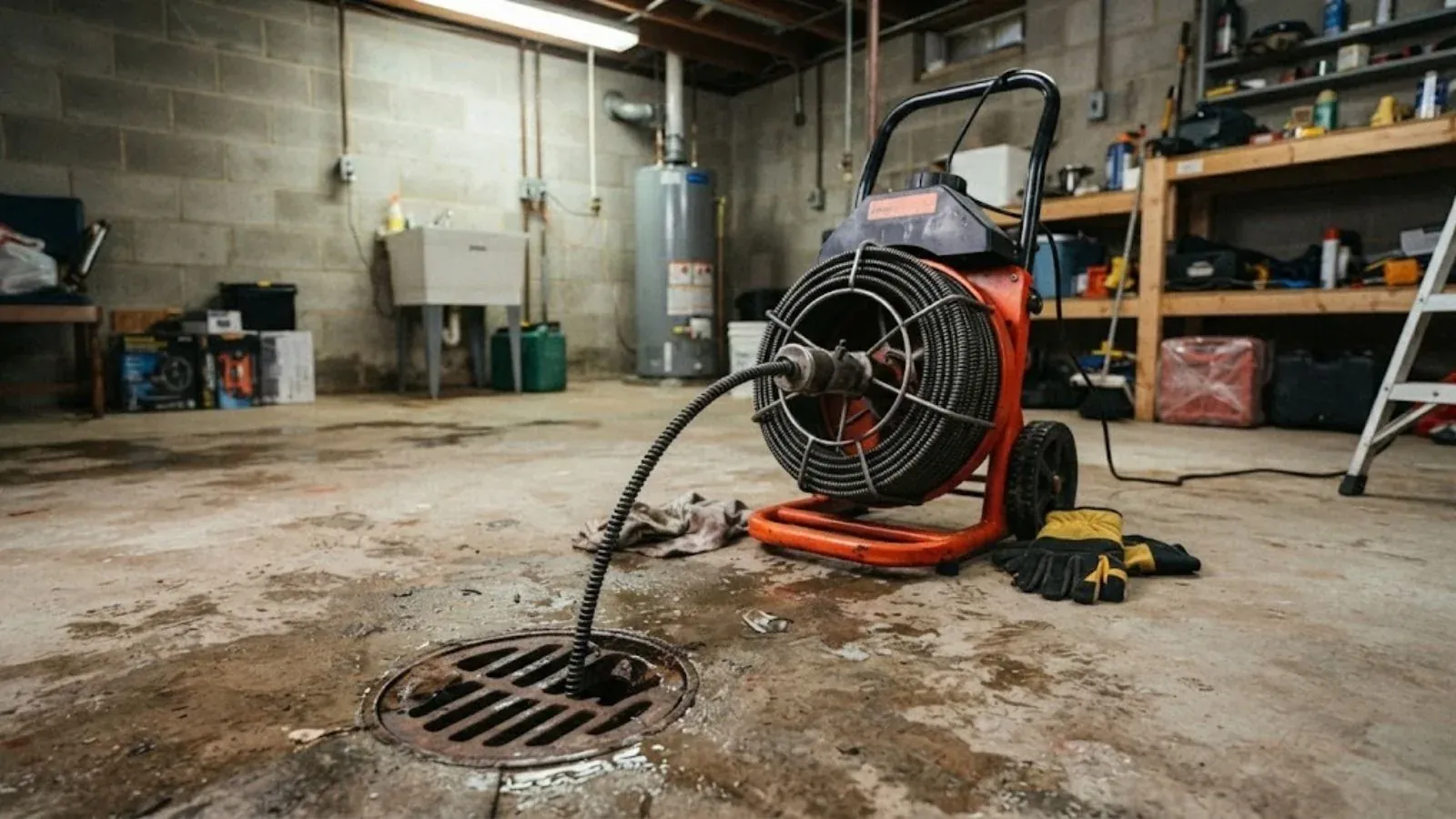
A blocked drain turns urgent fast, because water has nowhere to go but back up. Our dispatch line is open 24/7 for Bloomfield homes, and plumbers book same-day appointments when the schedule allows. While you wait, stop running water into the stuck line, keep the washer and dishwasher off, and lift rugs and boxes away from floor drains.
Drain cleaning means removing whatever narrows or blocks a drain pipe. That can be a wad of hair in a tub trap, a plug of cooking grease in a kitchen line, or tree roots in the pipe that leaves the house. The plumber picks the tool to match the blockage: a hand auger, a motorized cable, a water jet or a drain camera.
When a blocked drain is an emergency
Most slow drains can wait for a morning appointment. Some cannot, and the difference usually shows in where the water appears and what it contains.
Call the emergency line right away if
Any one of these means the blockage is past a single fixture and damage is likely if you wait.
- Water or sewage is rising in a tub, shower or floor drain when you flush or run the washer.
- Two or more drains are slow or gurgling at the same time.
- A toilet bubbles when a sink drains, or the water level in the bowl jumps.
- Wastewater is on a finished floor, a rug or near an electrical outlet.
- A family is in the house with only one working bathroom and the main line is clearly stuck.
- A cable or snake from a previous attempt is broken off inside the pipe.
- The smell of sewer gas is strong in a basement or bathroom.
If sewage is on the floor, keep children and pets out, wear gloves, and do not mix cleaners. The MDC sewer emergency page also tells customers to stop using fixtures, avoid contact and disinfect afterward. For a backup that may be in the street main, MDC's Command Center takes calls at (860) 278-7850, option 1.
Which drain is telling you what
One fixture drains slowly
The clog is usually in the trap or the short branch under that sink, tub or shower. Hair, soap scum and food scraps are the common causes.
Several fixtures slow at once
The blockage is likely downstream, in a branch shared by a bathroom group or in the main line that leaves the house.
Kitchen sink backs into the laundry sink
A shared kitchen and laundry line is stopped past the point where they join. Grease and starchy food waste are typical culprits.
Tub fills when the washer drains
The lowest drain in the house is the first to show a main line problem. Stop laundry until the line is open.
Toilet gurgles after a sink drains
Air is being pushed through water because the line is partly blocked or poorly vented. It often comes before a full backup.
Drain clears, then slows again within weeks
A cable punched a hole through a buildup that is still on the pipe walls. That pattern points toward jetting or a camera look.
How a drain cleaning visit works
Find the stuck point
The plumber asks which fixtures are slow, runs water to see where it backs up, and looks for a cleanout, usually near the main stack, in the basement or outside.
Open the line
A cable machine or a water jet goes in through a cleanout or a removed trap. Pulling a toilet is a last resort for a clog that can only be reached that way.
Check what came out
Roots, grease, wipes, toys or scale tell the plumber whether this was a one-time clog or a pipe problem. A camera confirms what the cable cannot.
Test and explain
Water runs at full volume through every fixture on the line. You get a plain description of what was found and whether it is likely to return.
Snake, jet or camera: choosing the tool
| Method | Best for | Limit to know about |
|---|---|---|
| Hand auger | Sink and tub traps, short branches | Reaches only a few feet and cannot scour pipe walls |
| Motorized cable | Toilet and main line clogs, roots | Opens a channel but can leave grease on the pipe wall |
| Hydro jetting | Grease, sludge, scale and heavy buildup | Needs a sound pipe and a cleanout to enter |
| Drain camera | Cables that stall, repeat clogs, odd smells | Shows the problem but does not clear it |
When a cable stalls or a clog keeps coming back, we usually move to hydro jetting after a camera look. If sewage is the main concern, sewer line cleaning covers the larger pipe between the house and the street.
Water coming up where it should be going down?
Stop using the sinks, tubs and toilets on that line and call the 24/7 dispatch number. A plumber can often clear a stopped drain the same day, and after-hours calls are answered by a person.
A clogged drain that will not clear on its own
The usual first move is a plunger on a toilet or sink, or a short hand tool on a trap. Those work on clogs near the fixture. A clog that survives a plunger and a bucket of hot water is deeper than you can reach.
Chemical openers are a poor next step. They sit in a pipe that is already full of standing water, and they can splash on whoever opens the line afterward. Mechanical clearing is safer for pipes and people, and the plumber can see what is blocking the line.
Clearing a clog in Bloomfield does not need a permit when no valves, pipes or fixtures are replaced or rearranged. That is the Building Division's exempt-work position. If a hidden pipe has failed and the repair means new material, that becomes new work with a permit and inspection.
The reason is the code behind it: the 2022 Connecticut State Building Code is built on the IPC, and it treats a replaced hidden drain as inspected new work even though clearing a clog is not.
Snaking, broken cables and cables that stall
Snaking sends a spinning steel cable through the pipe to break up or hook the blockage. It is quick and effective for hair, paper and soft debris. It has limits, and knowing them saves a second visit.
A cable that stops at the same distance every time is meeting something solid. That can be a collapsed section, a joint that has shifted, or a root mass too dense to pass. Pushing harder can snap a cable or tear a weak pipe. If a broken snake from an earlier attempt is still in the line, say so right away. A plumber can use a camera and retrieval tools to see how it lies before pulling.
After the cable opens a channel, ask what came out. A handful of hair and wipes is a habit problem. Gray grease sludge, tree roots or flakes of rusted pipe suggest the line itself needs attention, and a camera pass is worth the extra time.
Kitchen sink clogs
Kitchen drains clog differently from bathroom drains. Cooking fat cools inside the pipe, coats the walls, and catches coffee grounds, starchy rice and pasta water. A kitchen line can run slow for months before it stops, then back up on a holiday weekend.
MDC's grease guidance for residents is simple. Do not pour cooking oil or fat down the sink or toilet, and do not wash it down with hot water and soap. Let small amounts cool, seal them in a container for the trash, and wipe greasy pans with a paper towel first. That matters here because the grease that clears your trap can still harden in the pipe beyond it.
If the kitchen sink backs into a laundry sink, the blockage is on the shared line. If a disposal is involved, the plumber checks whether the clog is in the disposal drain or beyond it. A cable through the cleanout can open the line without disassembling the sink base. For disposal faults that are not clogs, see garbage disposal repair.
Bloomfield, CT: why MDC pipes and your pipes both matter
Bloomfield is one of eight MDC member towns, and MDC runs the sewer system and treats the wastewater. The town has about 114 miles of MDC sewer pipe, and roughly a quarter of it is more than 50 years old. During heavy storms, rain and groundwater can enter through cracked pipes, laterals, downspouts and yard drains, and basement backups have followed.
The practical meaning is simple. If every drain in the house gurgles during or after a downpour, the cause may be the public main or your lateral, not a hair clog. The lateral from your house to the street main is the owner's responsibility under MDC's ordinance. MDC says to call before any work on it, because it may not accept liability for work done without notice.
Not every Bloomfield property is on the sewer, since the town plan notes that sewer service is concentrated in the center and southern end. If you are not sure whether you have a septic system, the West Hartford-Bloomfield Health District can tell you, and the answer changes what we clear and how.
Hydro jetting when a cable is not enough
A hydro jetter sends high-pressure water through a hose and a specialty nozzle. The spray cuts grease and scale from the pipe wall and flushes it out, rather than punching a hole through it. It is the better answer when a line keeps slowing down after repeated snaking.
Jetting is not for every pipe. It needs a cleanout or access point, and a camera look first helps the plumber confirm the pipe is intact. Our hydro jetting page explains the process in detail.
Shower and tub drains, drain line leaks and pipe damage
Showers and tubs clog with hair and soap scum that hold together like felt. The plumber removes the stopper or overflow plate, pulls what is there, and runs a small cable below the trap. If water backs up from a tub when the toilet flushes, the blockage is farther down the line.
A drain line that leaks is a separate problem from a clog. Signs include a damp spot under a bathroom, a stain on a basement ceiling, or water appearing behind a wall when a fixture drains. A camera and a leak check show whether a section needs to be replaced, which is a repair rather than a cleaning. Cracked or sagging sections are also why cables sometimes stall.
What drives the cost of drain cleaning
We give a clear price before work starts. The number depends on a few specific things, which is why a phone quote needs a few questions first.
Ask your insurer how your homeowners policy treats sewer or drain backup. Many policies cover sudden and accidental damage but not wear, and backup often needs a separate endorsement.
Describe what is happening and we will tell you what to expect before anyone is dispatched.
Short answers on other drains
Some drain jobs are less common but still come up. A dishwasher air gap that leaks onto the counter is usually a clogged gap or a blocked drain hose. French drains and yard drains clog with silt, roots and leaves. Commercial floor drains with steel grates may need the grate lifted before any cleaning. For business properties, see commercial plumbing.
What you can do and when to call
- Try a plunger or a hand tool on a single slow fixture.
- Pour small amounts of cooled cooking fat into a can for the trash, not down the sink.
- Use drain screens in tubs and showers to catch hair.
- Flush only toilet paper. EPA says wipes belong in the trash, and MDC's sewer ordinance bars rags.
- Call when more than one fixture is slow, water is rising, or a cable will not pass.
- Call at any hour if sewage is in the house. Do not wait for morning.
We also send plumbers to West Hartford and nearby towns when a drain fails after hours.
Drain cleaning questions
Yes. Our dispatch line is open 24/7. Tell the dispatcher which fixtures are backing up and whether sewage is on the floor, so the plumber arrives with the right equipment. Same-day visits are offered when the schedule allows.
If only one fixture is slow, the clog is almost certainly in your own plumbing. If the lowest drain in the house backs up, or several drains gurgle together, the blockage may be in the lateral or the main. A camera pass can show whether the stoppage is on your side of the connection. MDC maintains the main, and the homeowner owns the lateral to it.
A plumber who matches the tool to the pipe keeps the risk low. Cables and jets are used with care on old or fragile lines, and a camera check helps before aggressive cleaning. If the pipe is cracked, we say so and explain the repair options.
Repeat clogs usually mean something is still on the pipe wall, such as grease, scale or roots, or the pipe has a dip or break that traps debris. A camera inspection and hydro jetting often solve what snaking only delays.
We advise against it. Chemicals do not remove most solid blockages, they can burn skin and eyes if they splash during later work, and they make the next repair messier. Mechanical clearing is a safer first choice.
Clearing a clog is on the town's permit-exempt list as long as no valves, pipes or fixtures are replaced or rearranged. If a failed pipe needs new material, that becomes work that needs a permit and inspection. The Building Division at 860-769-3516 can confirm for your situation.
Many floor drains and yard drain lines can be cleaned with a cable or jet. Tell us what type of drain it is, how it is covered, and where it discharges, and we will tell you what is realistic before we visit.