
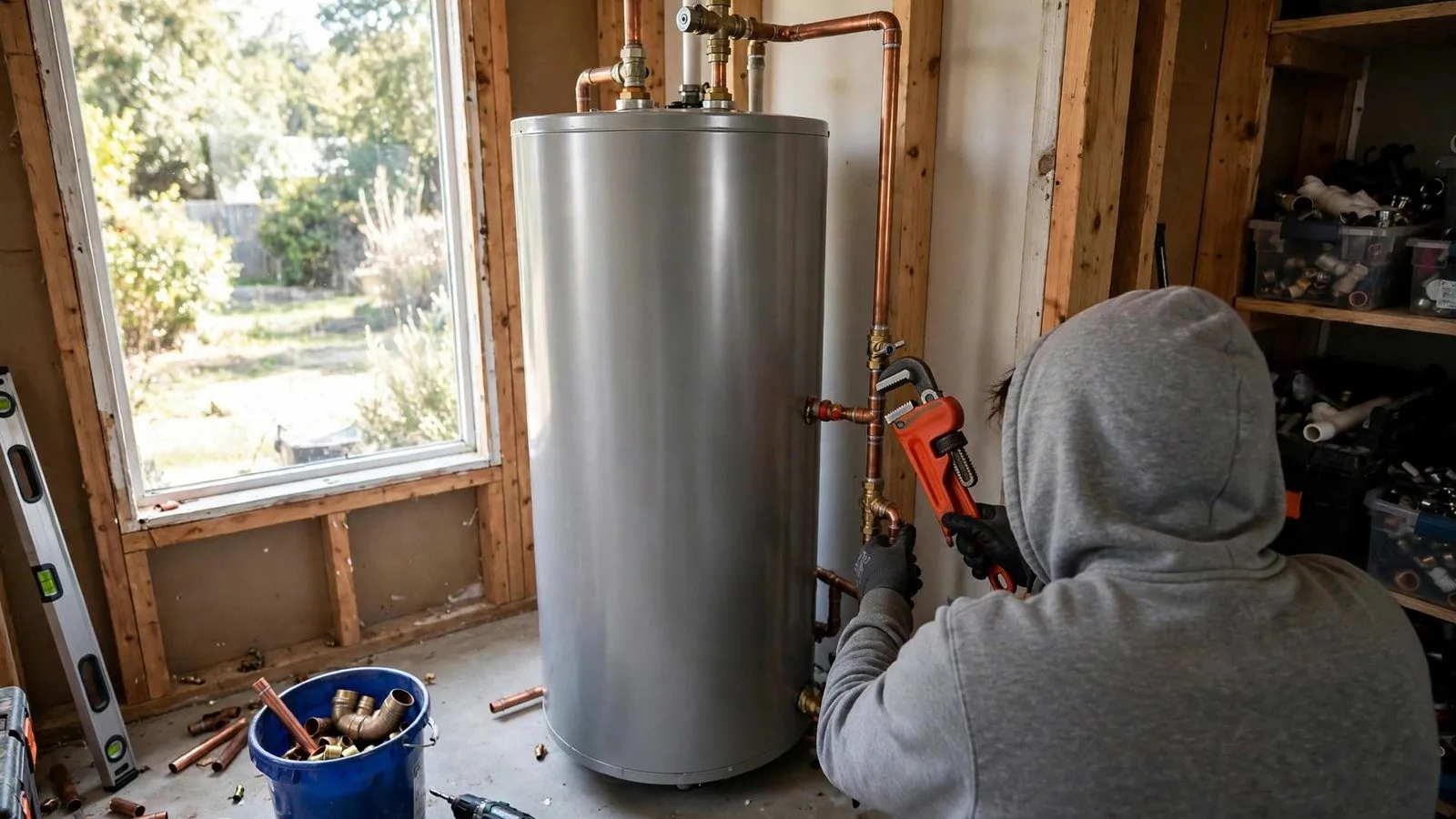
A water heater replacement means draining and disconnecting the old tank, setting a new heater on the same spot or a better one, and reconnecting water, fuel or power, venting and safety valves. In Bloomfield, CT the call usually comes when the tank is already failing. If water is on the floor or the shower has gone cold, our 24/7 line is open now, and the steps below keep the damage small while a plumber is on the way.
When a dying tank is an emergency
Most tanks give a few warnings before they quit: rusty hot water, a rumbling sound as sediment cooks, or damp metal at the base. The real emergency starts when the tank lets go. A steady drip into a bucket can wait for a morning visit, but a stream from the bottom seam or a burst fitting needs a plumber today.
What to do while you wait for the plumber
These steps take a few minutes and stop most of the damage.
- Close the cold water valve on the pipe feeding the top of the heater. A quarter turn on a ball valve or a clockwise turn on a gate valve.
- Electric heater: switch off its breaker. Gas heater: turn the gas control to off or pilot.
- If you smell gas or hear hissing near a gas unit, leave the house and call Connecticut Natural Gas at 866-924-5325 or 911 from outside before you call us. Do not flip switches on the way out.
- Keep everyone away from standing water near outlets, extension cords or a panel.
- Open a hot faucet upstairs so the pipes drain and pressure drops.
- Move boxes, paint cans and stored items off the floor around the tank.
- Take a photo of the tank label and any water damage for your insurer.
- If the leak is at the street side of your meter, MDC takes water emergencies at (860) 278-7850, press 1.
Tank leaking right now?
Shut the cold valve, then call. We book same-day appointments when available and dispatch around the clock for floods and failed tanks.
Repair or replace: how the decision usually falls
Not every cold shower means a new tank. A bad thermostat, a burned-out element or a worn thermocouple is cheaper to fix than to replace. Age, leaks and rust decide most of the rest, and our plumber will say plainly which side your unit falls on before anything is ordered.
| What you see | Usually points to | Why |
|---|---|---|
| Water at the base of the tank | Replacement | A leak through the steel shell cannot be patched. The inner tank has corroded through. |
| Tank about 15 years old and slowing down | Replacement | Sediment and a spent anode rod have worn the tank. Repairs buy little time. |
| No heat but the tank is dry and young | Repair | Elements, thermostats and gas valves are replaceable parts. |
| Drip from the relief valve or a fitting | Repair first | A worn valve or loose union is a small fix if the tank is sound. |
| Rust-colored hot water only | Depends | Could be the anode rod or the tank itself. A flush and inspection tell which. |
| Repeated repairs in one year | Replacement | Each part costs less than a tank, but the total keeps climbing. |
What wears a tank out
A tank water heater is a steel vessel with a glass-like liner, and the anode rod inside corrodes on purpose so the steel does not. Once the rod is used up, the steel starts to rust from the inside. A tank around 15 years old that is bucket-leaking is almost always in this stage, and no part will stop it.
Sediment is the other killer. Minerals settle on the bottom, cook under the burner or element, and make the unit loud and slow. A yearly flush slows the damage. Skip it for a decade and the tank often fails earlier than the manual suggests.
Why a slow leak costs more in Bloomfield
Bloomfield customers get water from MDC, which bills for every unit that passes through the meter whether it is used or wasted. A tank weeping into a floor drain or sump can run for weeks without anyone noticing, and the usage shows up as a higher bill. If your bill jumps and the heater base looks damp, treat that as a replacement signal and call us.
Choosing the new unit: gas, electric, heat pump or tankless
About half of Bloomfield homes were built before 1970 according to the town plan, so many basements still hold older tanks with older shutoffs and vents. A like-for-like swap is the fastest and often the cheapest route. Changing fuel or type adds work, so decide before the old tank comes out. We can talk through each path on the phone.
Same fuel, same size
A 40 gallon gas tank replaced with another 40 gallon gas tank usually reuses the venting, gas line and water connections. This is the quickest option.
Gas to electric or the reverse
Switching fuel means a new power circuit or a new gas line and vent. The electrical side is separately licensed trade work in Connecticut, so we plan who handles it before the visit.
Heat pump water heater
These are efficient but need floor space, headroom and a spot that can handle cooler exhaust air. Energize CT has offered rebates by calendar year, so check its current rules before you buy. The federal home-efficiency credit for these units ended with 2025.
Tankless
On-demand units do not hold a tank of water, but they need the right gas size or electrical capacity and a proper vent. Our tankless water heater page explains when that trade-off pays off.
Rerouting the vent or leaving the old chimney
Some older homes have a gas heater venting through a masonry chimney, and callers often ask to move the exhaust to a sidewall. That is possible with the right vent kit and a unit rated for it, but the vent run, clearances and condensate rules vary by appliance. Our plumber reads the manufacturer's instructions for your model and plans the route before cutting any holes.
A chimney that was sized for an old, hot-burning heater can also cool exhaust too much for a new high-efficiency one. If we see staining, soot or a rusted flue, we say so and give you the options.
How a replacement day runs
Shut off and drain
We close the water, kill the fuel or power, and drain the tank to a floor drain or outdoors by hose.
Disconnect and remove
Old supply lines, vent connectors and valves come off. The empty tank leaves with us.
Set and connect
The new heater goes in level on its pan or base, with new flexible connectors, a temperature and pressure relief valve and a discharge pipe.
Fill, fire and test
We refill the tank, purge air from the lines, light or power the unit and check for leaks, draft and temperature.
Permits and inspections in Bloomfield
The Bloomfield Building Division enforces the 2022 Connecticut State Building Code, which is built on the 2021 International Plumbing Code (IPC). Plumbing work gets its own trade permit, separate from any building permit, and inspections are scheduled about 48 hours ahead. The town's exempt-work list covers stopping leaks and repairing valves or fixtures, but it does not speak to water heaters by name.
Because of that, we do not guess. If your swap changes piping or the fuel line, the Building Division at 860-769-3516 can say whether a permit applies, and we handle the paperwork we are responsible for. Gas and water piping fall under Connecticut plumbing law, so the work stays with licensed plumbers.
What drives the price of a replacement
We give a clear price before work starts. These are the things that move it.
Ask your insurer how your policy handles water damage. Homeowners policies commonly cover sudden and accidental damage but not wear or slow leaks, and the tank itself is usually a maintenance item.
Call and describe your heater. We will tell you what the swap involves and give you the real number before we start.
When the tank has already flooded the floor
A tank in a finished basement or utility room can empty 40 or 50 gallons in a short time. After the water is stopped, the job turns to removal and drying. We replace the heater, but we do not do mold testing or structural drying, so ask your insurer or a restoration company about those steps.
If you also suspect a leaking supply line or a pipe in the slab near the heater, say so on the call. A leak detection visit can pinpoint it before the new tank goes in.
After the new heater is in
- Ask the plumber to show you where the temperature dial sits and test the water at a tap before small children use it.
- Test the relief valve lever once a year to make sure it moves and reseats.
- Flush a few quarts from the drain valve each year to clear sediment.
- Keep storage at least a few feet from the burner or vent opening.
- Check your carbon monoxide alarms. Connecticut health officials recommend one on every level and near sleeping areas, with units replaced every 7 to 10 years.
If you live in West Hartford or Windsor and wonder whether we reach you, the West Hartford plumbing page and Windsor page list the neighborhoods we cover. A new heater installed by us gets a careful setup with new connectors and a documented test.
Water heater replacement questions
Yes. Our dispatch line runs 24/7, including nights, weekends and holidays. A leaking tank or a flooded utility room is treated as urgent, and we book same-day appointments when available. Shut off the water to the heater, switch off its power or gas, and call.
A standard tank swap with the same fuel and vent usually takes a few hours. Changing fuel, relocating the unit or rerouting a chimney vent adds time, and the plumber will tell you what to expect when the job is scoped.
Often yes. A heat pump unit needs space, a drain for condensate and a compatible circuit, so the plumber and a licensed electrician may both be involved. Check Energize CT before buying, because rebate rules have changed by year.
A leak from the tank body means replacement. A dry, young tank with a failed element, thermostat or gas valve is usually worth fixing. Our water heater repair team can diagnose it and tell you which.
Plumbing work gets its own trade permit, and Bloomfield's exempt list does not mention water heaters by name. The Building Division at 860-769-3516 can confirm what applies to your job, and we follow its inspection process.
Leave the building right away and call Connecticut Natural Gas at 866-924-5325 or 911 from a neighbor's phone or outside. Do not turn lights on or off and do not call a plumber first. We can come after the gas utility says the home is safe.
Yes. The old unit is drained, disconnected and carried out as part of the job.