
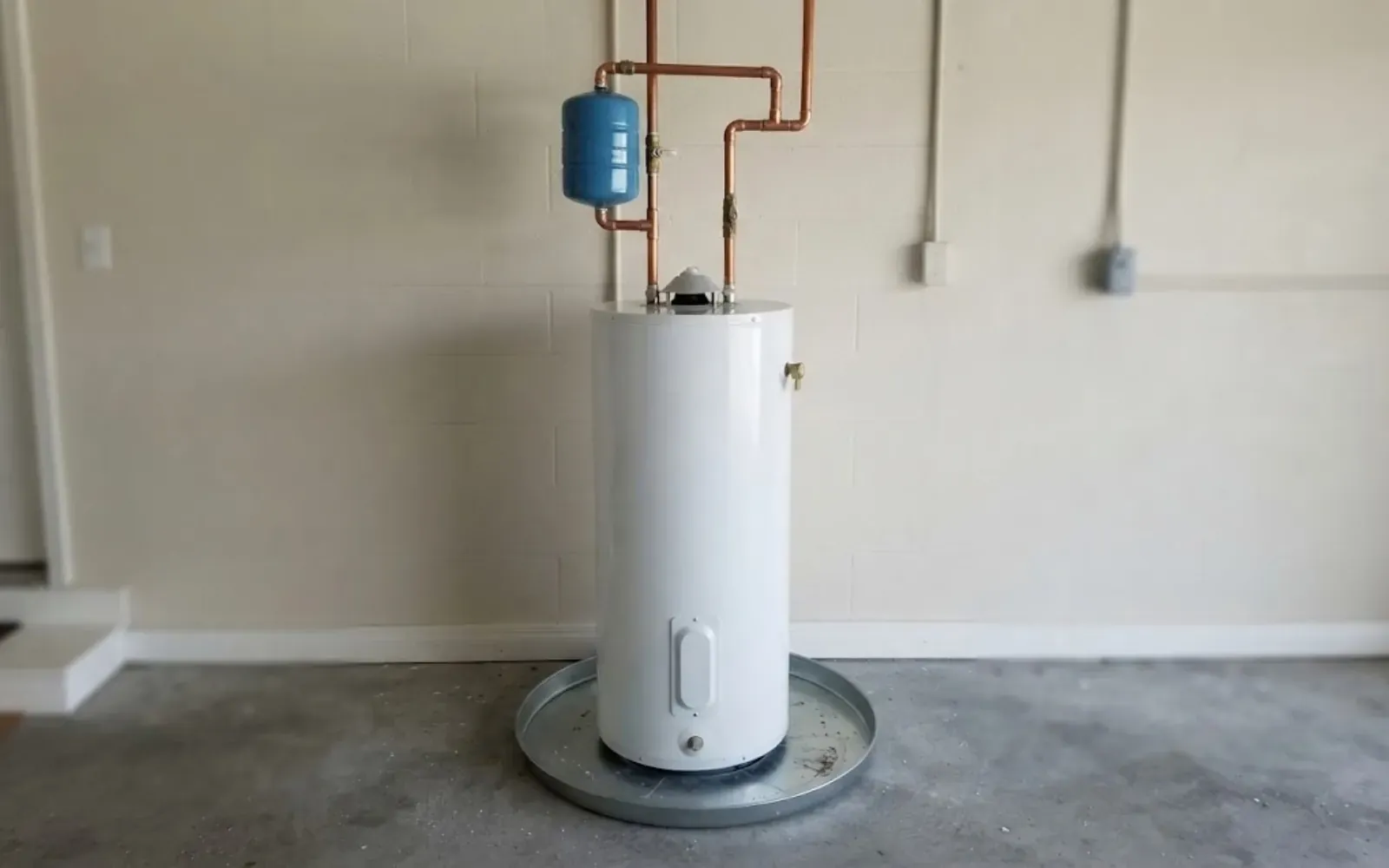
A water heater installation is the full job of placing a heater, connecting its water, fuel or power and venting, adding the safety devices code requires, and testing the result. It applies to a new build, a remodel that moves the utility room, a fuel change or a first-time heater in an addition. If your current tank is leaking or dead, our replacement service is the faster route, because this page is about planned work.
Five decisions to make before install day
- Fuel: natural gas, propane, electric or a heat pump that pulls heat from the surrounding air.
- Type: a storage tank, a heat pump tank or a tankless unit.
- Size: how many people shower, run dishwashers and wash clothes at the same hour.
- Location: basement, closet, garage or attic, and what clearance the model needs.
- Venting and drainage: chimney, sidewall vent or power vent, plus a place for the relief discharge and condensate.
A planning call takes only a few minutes and prevents most surprises. Tell us the home's fuel, the current heater's size and age if there is one, and any plan to change fixtures. Households of different sizes use hot water in different bursts, so the first-hour rating on the label matters as much as tank volume.
Gas, electric or heat pump in a Bloomfield home
Connecticut Natural Gas serves Bloomfield, and Eversource is the electric company. That matters because a house with a gas meter can use a gas heater with minimal change, while an all-electric house needs the correct circuit size for the unit. Connecticut households heat with a mix of fuels: about 36 percent natural gas, 39 percent fuel oil or kerosene and 19 percent electricity in 2020 federal data.
| Option | What it needs | Good fit when | Watch for |
|---|---|---|---|
| Gas tank | Gas line, vent, water | Gas service is already in the home | Vent condition and clearances |
| Electric tank | Dedicated circuit, water | No gas available | Higher running cost than a heat pump |
| Heat pump tank | Circuit, space, condensate drain | You want lower electric use | Needs room and cooler surrounding air |
| Tankless gas | Larger gas line, special vent | Space is tight, use is modest | Venting and gas supply size |
| Tankless electric | Heavy electrical capacity | Point-of-use or small homes | Panel capacity |
Federal data says tankless units can run roughly 24 to 34 percent more efficiently than storage tanks in homes using 41 gallons a day or less, and 8 to 14 percent at about 86 gallons. Our tankless page explains the trade-offs in more detail.
Heat pump rebates change by year
Energize CT has offered rebates for qualifying heat pump water heaters, but its program pages have run by calendar year, and the federal credit for these units ended with 2025. Check Energize CT for current terms before you buy, because buying first can lose you the incentive.
Planning a new heater?
Call with your fuel type, the space you have and the heater you are considering. We book same-day appointments when available, and planned installs fit into regular daytime slots.
Electrical work and who does it
Connecticut law separates plumbing work from electrical work. Plumbing covers water and gas piping and the heater's fixtures. Wiring a dedicated circuit is licensed electrical work with its own permit. When your install needs a new circuit, we plan the handoff so the electrician and plumber do not leave a gap between the two.
Ask your installer who is pulling each permit before you sign. That one question avoids most scheduling and inspection delays.
Permits and inspections
Bloomfield's Building Division enforces the 2022 Connecticut State Building Code, which uses the 2021 International Plumbing Code (IPC) and the 2021 International Mechanical Code. A plumbing job gets its own trade permit, and most permits are issued about 10 days after plans are submitted. Inspections are booked about 48 hours ahead.
The town's exempt-work list does not name water heaters, and adding or relocating supply piping is never exempt. The Division is at 800 Bloomfield Avenue and takes appointment calls at 860-769-3516. We tell you what we have found out before the work date, not after.
What the installation visit includes
Site check
We confirm clearances, floor drainage, shutoff valves, gas or electric supply and the vent path.
Set the unit
The heater is placed level on a pan or stand, with room for service and combustion air.
Connect and protect
Water connectors, shutoffs, an expansion tank where the system needs it, a relief valve and discharge line, and gas or electrical hookups are installed.
Test and show you
We purge air, check for leaks, test the burner and draft, and show you the shutoffs and the temperature control.
Moving a vent or relocating the heater
Some installs are not like-for-like. A heater might need to leave a chimney and vent through a wall, move to a new utility room, or switch from a standing pilot unit to a sealed combustion model. Each change alters the vent length, gas line run, drain location and sometimes the permit.
We read the manufacturer's installation manual for your model and follow its approved vent material and clearances. Never mix vent parts from different brands. On gas units, keep carbon monoxide alarms on every level and near bedrooms, and replace them every 7 to 10 years, as Connecticut health officials advise.
What shapes the cost of installation
Quotes are given before work starts, so you can decide with the full picture.
Ask your insurer how your policy treats a heater upgrade. Installs are usually an owner expense, while sudden water damage is a separate question.
To get a real number, call and describe the heater you have and the one you want. We can often give a good estimate of the scope on the phone.
After installation: problems and routine care
A newly installed heater that will not heat is rare but happens. Common causes are a tripped breaker, a closed gas valve, or air trapped in the lines. If it occurs, call the installer rather than opening the unit yourself. Our repair team can also assist when the original installer is not available.
- Flush the tank once a year. MDC describes its water as soft, about 15 mg/L, so scale is lighter here, but sediment still collects.
- Test the relief valve lever annually.
- Keep the area around the heater clear of boxes and chemicals.
- Know where the cold supply valve is so you can stop water fast.
- Keep the label, manual and installation date together.
Homes in Simsbury and the city of Hartford fall inside our service area as well, with the same installation process.
Installation questions
A standard like-for-like job often takes part of a day. A fuel change, relocation, new vent or electrical circuit takes longer, and the plumber can give an estimate when the scope is clear.
Yes, on suitable homes. The unit needs space, a condensate drain and a proper circuit, and the electrical piece is handled by a licensed electrician.
Plumbing work gets its own trade permit, and the exempt list does not mention water heaters. The Building Division at 860-769-3516 can confirm what applies to your job.
Often yes, if the heater is rated for it and the vent run meets the manufacturer's rules. We plan the route first and check the permit requirements.
It depends on how many people use hot water at the same time. The first-hour rating on the label tells you more than the gallons alone.
Shut the cold valve at the heater, turn off its power or gas, and call our 24/7 line. A leaking tank is handled as a replacement, not a planned install.
Yes. We drain, disconnect and remove it as part of the work.