
Rusty water, weak flow and the same leak twice
Most repiping jobs begin with a pattern, not a single failure. The shower runs weaker than it used to. Hot water comes out tinted orange after the house sits unused. A plumber patches a pinhole in the basement, and a few months later another one opens a few feet down the same line.
When pipes show that behavior, the walls of the pipe are usually thinning from the inside. The fix for that is repiping, which means replacing the supply lines that bring water to every fixture with new pipe. It is a planned project, and you have time to compare options and schedule the work.
Why older Bloomfield houses show it
The town's draft plan says about 52 percent of Bloomfield's housing stock was built before 1970. Houses from that period were often plumbed with galvanized steel or early copper, and some later houses carry CPVC or other plastic that has its own limits. Age alone does not condemn a pipe, but it tells us where to look first.
MDC states its water is soft, with hardness around 15 mg/L, or about one grain per gallon. That means mineral scale from hard water is not the usual culprit here. In old galvanized lines the trouble tends to be rust building up inside the pipe, which narrows the opening and drops pressure at the far fixtures.
Galvanized steel
Zinc-coated steel corrodes from the inside over decades. Look for rust-colored water, low flow, and threaded joints that crust and weep.
Copper
Copper lasts a long time, but pinholes can develop in a few spots of a line while the rest stays sound. We test before recommending a full replacement.
CPVC and other plastics
Some CPVC systems become brittle with age and heat and crack at fittings. Callers often ask us to replace them before a fitting fails.
Polybutylene and mixed systems
Older houses with additions often mix materials. Mismatched metals at joints can corrode, so we map the system before pricing.
How we judge whether your pipes need replacing
We do not recommend repiping on age alone. A visit starts with a pressure reading at an outside hose bib and at the farthest fixture. A big gap between them points to restriction in the lines. We then look at pipe material, joint condition and any repairs already made, and we check the shutoff valves while we are there.
If a section of pipe can be cut open and inspected, we show you the inside. A heavily scaled or rust-packed pipe tells the story faster than any estimate. If the evidence is mixed, we say so, and we may propose a limited repair now with a plan for the rest.
| Your situation | Better fit | Why |
|---|---|---|
| Several leaks in different rooms | Whole-house repipe | The system is failing broadly, and patches will keep coming |
| One failed run, rest tested sound | Partial replacement | Only the bad run is replaced, with less wall opening |
| Rust-colored water at every tap | Whole-house repipe | The corrosion is inside the pipe and spread through the system |
| Remodel with walls already open | Replace what is exposed | Opening drywall is the largest cost, so use the access |
| CPVC with cracked fittings | Run-by-run or full replacement | Depends on how many fittings and runs are affected |
What a repipe involves, step by step
Plan the route
We walk the house and decide where new lines will run, usually through basements, closets and attic space to keep wall openings small.
Pull the permit
Replacing supply piping is not exempt work in Bloomfield, so the job needs its own plumbing permit and inspection.
Install new lines
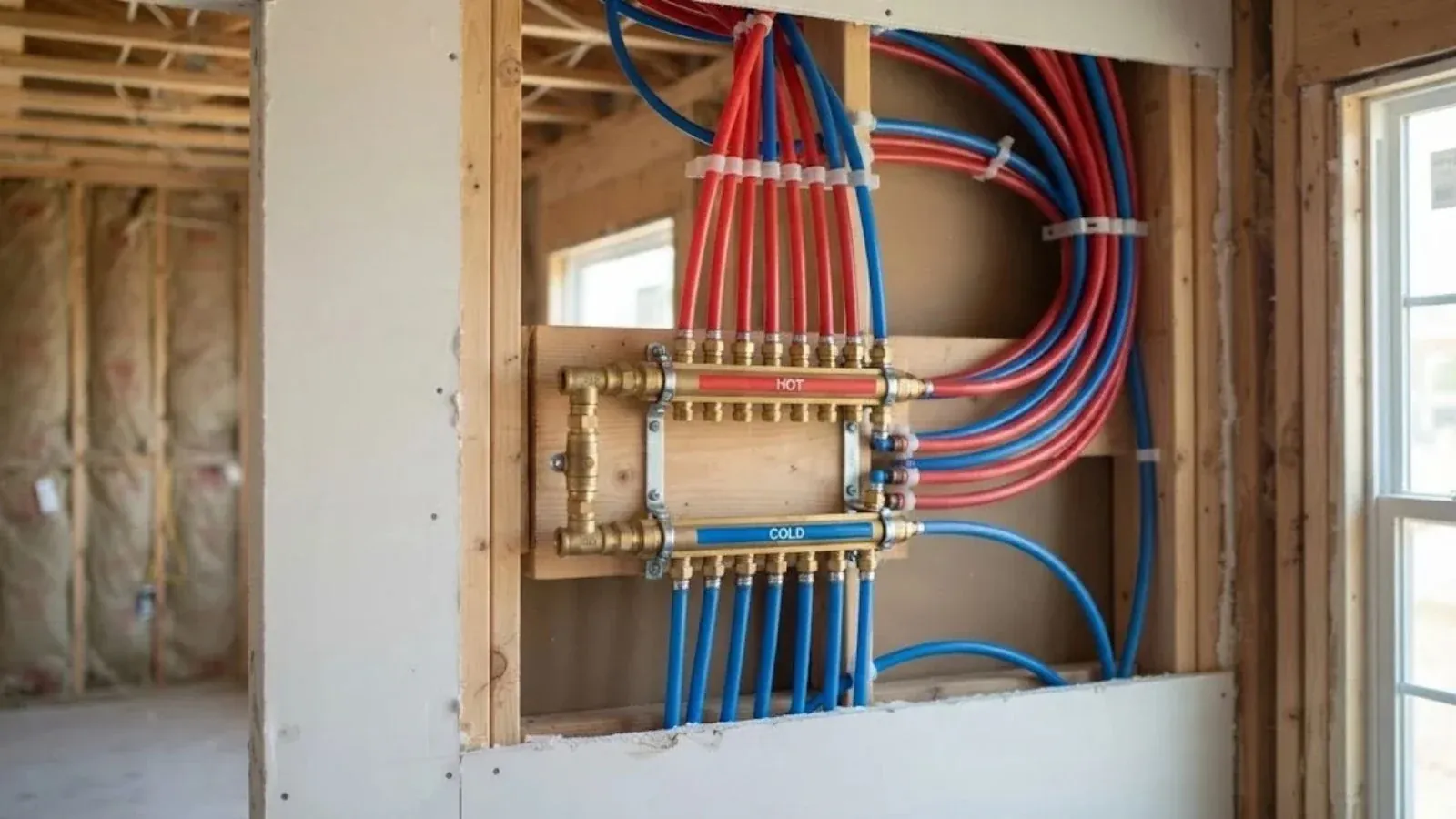
We run new pipe to every fixture, connect it to the main shutoff and water heater, and pressure-test before closing anything.
Inspect and patch
The Building Division inspects the work. After it passes, we close the openings and leave the walls ready for a drywall contractor.
Permits run through the Building Division at 800 Bloomfield Avenue (860-769-3516). Plumbing work there follows the 2022 Connecticut State Building Code, whose plumbing rules come from the 2021 International Plumbing Code (IPC). Most permits take about ten days after plans are submitted, and inspections are scheduled about 48 hours ahead, so build that time into your schedule.
Ready to compare repiping options?
Tell us what the water is doing and what your pipes are made of. Call Call (860) 397-8103 to schedule an inspection. Same-day appointments are available when the schedule allows.
Galvanized, copper or PEX: choosing the new pipe
We replace old supply lines with modern approved materials such as copper or PEX. Copper is rigid and long-lived, and it suits exposed runs in basements. PEX is flexible, travels through walls with fewer joints and is less likely to split in a freeze, though it needs protection from sunlight and must be installed with the proper fittings. The right choice depends on your layout and your budget.
If you also want a new water heater or shutoff valves, plan them together. Our water heater replacement service can be scheduled with the repipe so the tank connections are done once.
Repairs that make sense before a repipe
Sometimes the right answer is a smaller repair. A single leaking joint, a corroded valve or one failing fitting can be fixed without a whole-house project. When a pipe has failed under a slab, we may reroute it through the walls or attic instead of cutting concrete. If a line is bursting right now, that is a different call, and our burst pipe repair team handles it.
What drives the cost of repiping
Repiping prices vary widely because houses vary. These are the real drivers.
Ask your insurer whether any part of the work is covered. Policies usually cover sudden and accidental damage, not replacement of worn pipes, though a related water loss may be treated differently.
Call (860) 397-8103 to schedule a visit. We tell you the clear price before work starts.
Living in the house during the work
Most repipes are done in stages so you can keep some water running, though the main supply will be off for part of each day. Plan to move valuables from the work areas and keep pets out of the way. A typical house takes several days, depending on size and access.
If your home is in Greater Hartford and you are comparing quotes, our crews also work in Avon. A plumber who explains what will be cut open, how long water will be off and who closes the walls is worth more than one who quotes a number over the phone.
Repiping questions homeowners ask
Warning signs include rust-colored water, low pressure that gets worse, repeated pinhole leaks, and fittings that crumble when touched. A plumber should test pressure and inspect the pipe before recommending a full replacement.
Not always. If tests show one run is failing and the others are sound, a partial replacement may be enough. We explain what we found and let you choose.
It can, if the restriction comes from corroded or narrowed pipe. Low pressure also comes from a partly closed valve, a failing regulator or a problem with the water service line. We check those first.
It can be. Galvanized steel corrodes from the inside over time, narrowing the pipe. Not every old galvanized line has failed, but it deserves a pressure test and a close look.
It depends on the size of the house and how easy the walls are to reach. Many jobs take several days, with drywall repair as a separate step.
Yes. In Bloomfield, replacing or altering supply piping is not exempt work, so it needs a plumbing permit and inspection. The Building Division can walk you through the current steps.
Yes. Tell us when the walls will be open, and we can plan the piping to fit before drywall goes up.