
Weak pressure, a soggy yard, or a meter that never stops
A failing service line rarely announces itself. Pressure drops at every tap, a stretch of lawn stays wet in dry weather, or the meter keeps turning when the whole house is off. Callers also describe a shutoff test that points straight at the pipe between the meter and the house. If any of this sounds familiar, call our 24/7 line and close the house valve in the meantime.
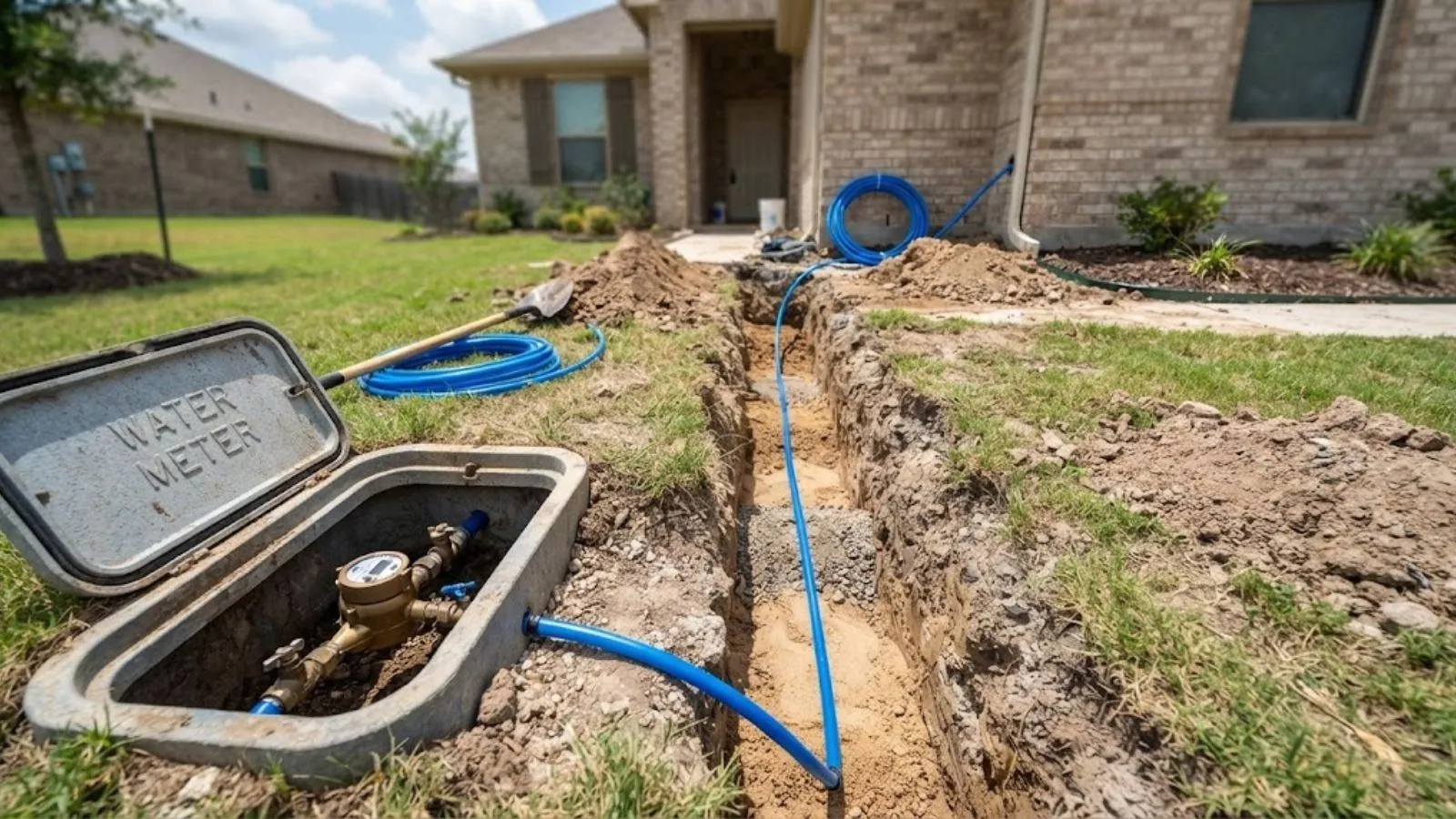
That buried pipe is the water service line. It runs from the MDC main in the street, through a curb stop and meter, to the point where water enters the house. Repairing it means finding the break underground, digging or boring to reach it, and replacing the damaged section with pipe rated for the job.
Who is responsible for which stretch of the line
Ownership is the first question every homeowner asks. Under the MDC water ordinance, the owner owns the service pipe along its full length from the main, and repair is the owner's job. There is one carve-out. When an aging pipe fails between the main and the meter pit or curb stop on your side, MDC takes that stretch on at no cost to you.
Past that point, the cost is yours, and the work must be done by a state-licensed installer hired by the owner. MDC also inspects the stretch from the main to the meter setting before it is backfilled. MDC does not publish a plain dividing line that fits every lot, so call (860) 278-7850 and ask where the handoff is on your property before you dig.
| Stretch of pipe | Who repairs it | What to do |
|---|---|---|
| Main in the street | MDC | Call the MDC command center, press 1 |
| Aging pipe from main to meter pit or curb stop | MDC, at no cost to the owner, when it fails there | Ask MDC to confirm before any work |
| Curb stop to the house | Property owner with a licensed installer | Call us for diagnosis and repair |
| Meter | MDC supplies and maintains it | Do not remove or tamper with it |
| Piping inside the house | Property owner | Call us for repair or replacement |
When a service line leak is an emergency
Treat a broken service line as an emergency when water is surfacing in the yard or driveway, rushing into a basement wall, or flooding the meter pit. A line that has lost all pressure also counts, because you have no water for the house. We dispatch around the clock and offer same-day visits when the schedule allows.
What to do while you wait
These steps limit the damage and speed up the repair.
- Close the main valve inside the house and see whether the leak slows or stops.
- If water is flooding from the pipe at the street side of the meter, call MDC at (860) 278-7850 and press 1.
- Keep children and pets away from wet, soft or sunken ground.
- Move belongings away from basement walls where the line enters the house.
- Do not run a pump or excavator near the line before utilities are marked.
- Take photos of the wet area and the meter reading for the plumber.
Water is surfacing in the yard
Close the house valve and call Call (860) 397-8103. Tell the dispatcher where the water appears and whether pressure is gone. We will plan the earliest visit the schedule allows, any hour.
How we find the break before we dig
Isolate the line
We shut the house valve and watch the meter. If it still moves, the leak is on the buried side. If it stops, the problem is inside.
Trace the pipe
A pipe locator follows the line's path, and a ground microphone listens for the hiss of escaping water along that path.
Mark the utilities
We call 811 so gas, electric and other buried lines are marked before any excavation starts. Connecticut requires this contact before digging.
Open and verify
We dig at the marked spot, confirm the break and check the pipe on both sides for corrosion before we cut.
Repair or replace: choosing for your line
A single clean break in sound pipe can often be spot repaired with a coupling. Old galvanized steel or corroded copper is a different case. When the pipe is thin along its length, a patch just moves the leak. We show you the cut-open section so you can see the condition and make the call with us.
Replacement means a new run of pipe from the connection point to the house. Open-trench digging is the most direct, while trenchless methods can limit lawn and driveway damage when the site allows. Ask MDC what it has on record about your line material, because the answer affects the plan. Our repiping page covers what happens when the pipes inside the house are aging too.
A local cost option worth asking about
MDC runs a Water and Sewer Service Installation Program that lets MDC pay for the work up front and the owner repay through the water bill over 15 or 20 years. MDC's public description does not list which jobs qualify, so ask MDC at (860) 278-7850 before you sign a contract.
Installing or altering a water service is restricted work under the ordinance. It goes to MDC, an approved government crew or a person licensed by the state.
Buried leaks that hide behind a high bill
Many service line leaks never reach the surface. Clay soil can soak up a steady leak, and water can follow a gravel bed to a drain instead of coming up as a puddle. In that case the first proof is a rising bill. MDC bills by the CCF, about 748 gallons, and the owner pays for every unit through the meter whether it was used or wasted.
Connecticut's Call Before You Dig standards require excavators to contact 811 before digging, so a contractor opening your yard should call first.
If your bill has crept up, our leak detection service can separate a service line leak from a running toilet or an interior pipe. The EPA says the average home loses more than 9,300 gallons a year to leaks, so a steady buried break can cost a lot more than that over a winter.
Frozen service lines and winter work
A service line that freezes usually sits shallow near a foundation wall or a driveway edge. If water stops in a cold snap and the neighbors still have it, the line may be frozen before the meter or at the entry point. Open a tap, keep the house heated, and call. We do not thaw buried lines with open flame, and we cannot say how deep a given line runs without locating it first.
What shapes the cost of service line repair
Underground work has more variables than most plumbing jobs. These are the ones that matter.
Ask your insurer whether your policy covers underground lines. Policies typically cover sudden and accidental damage and treat wear or gradual leaks differently, and underground lines may need a separate endorsement, so ask.
Call (860) 397-8103 and we will walk through the work and give you a clear price before work starts.
If the pipe split from a freeze or a pressure spike, see how we handle it under burst pipe repair. We also serve homeowners in nearby Simsbury.
Service line questions answered
Yes. The line at (860) 397-8103 is open 24/7. If water is surfacing or pressure is gone, close the house valve and call. If the break is on the MDC side of the connection, MDC's command center at (860) 278-7850, press 1, is also available.
Under MDC's ordinance the owner holds the whole service pipe, except that MDC absorbs an aging pipe failure between the main and the meter pit or curb stop. Call MDC to confirm how this applies to your lot.
Close the main valve inside the house and watch the meter. If it keeps moving, water is escaping on the buried side. A wet patch of lawn, a sunken area or low pressure all support that finding.
Yes. Connecticut requires excavators to contact Call Before You Dig at 811 or 1-800-922-4455 before digging. We make the call and wait for the utilities to be marked.
Sometimes. Trenchless methods can limit digging when the soil and layout allow. We tell you which method fits after we locate the line.
If your house is older, ask MDC what it has on record for your line material. We can identify visible pipe at the meter and entry point, and replacement is done with approved modern pipe.
Service pipes must be installed by a state-licensed person hired by the owner, and MDC inspects the main-to-meter stretch. For plumbing inside the house, call the Building Division at 860-769-3516 to confirm the permit steps.