
Your water bill is up and no ceiling is dripping
A hidden leak is urgent even when the house looks dry. Water is leaving the pipe around the clock, and every hour adds to the meter reading and to the damage under the floor. Our 24/7 line is open now. While you wait for a plumber, shut every faucet and appliance, then close the main valve if the meter still moves.
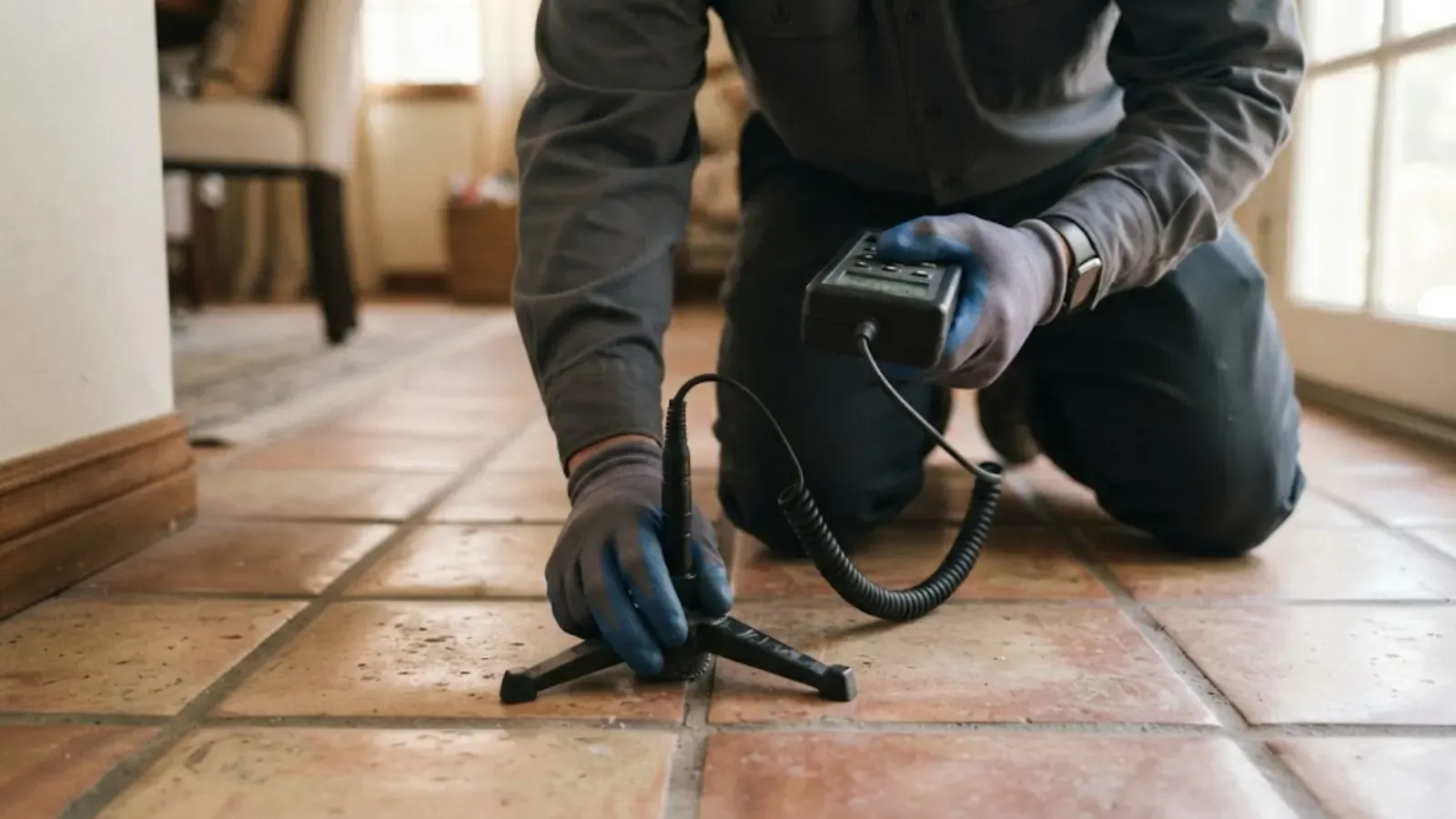
The service that finds that kind of leak is called leak detection. A plumber listens to the pipe with an acoustic sensor, tracks the sound to one spot, and confirms it with pressure testing or a thermal camera. The goal is a small, exact opening in the wall or floor instead of a guess that costs you a whole room.
A ten-minute meter check before you call
You can learn a lot before anyone arrives. MDC bills Bloomfield water by the CCF, which is 100 cubic feet or about 748 gallons, and the owner pays for every unit that passes through the meter, whether it was used or wasted. A leak therefore shows up as your bill, with no warning light.
Do this before the plumber arrives
These steps take about ten minutes and tell us where to start.
- Turn off every faucet, the dishwasher, the washing machine and the ice maker.
- Find the water meter and look at the leak indicator or low-flow dial if your meter has one. Any movement with everything off means water is escaping.
- Close the main shutoff where the line enters the house, then check the meter again. If it stops, the leak is inside your walls. If it keeps moving, the leak is between the meter and the valve.
- Drop a few drops of food coloring in each toilet tank, wait 15 to 20 minutes without flushing, and look for color in the bowl. MDC lists toilets as the cause of about 95 percent of the leaks it tracks.
- Write down the meter reading, wait an hour with the water off, and read it again.
- Photograph any damp drywall, stains, warm floor spots or new cracks so the plumber can see the pattern.
Not every cause is hidden. The EPA reports that the average home loses more than 9,300 gallons a year to leaks, and about 9 percent of homes leak 50 gallons a day or more. Fixing the easy leaks can trim a water bill by roughly 10 percent.
Where hidden leaks usually hide in a Bloomfield house
Toilet tanks and supply lines
A flapper that does not seal leaks silently into the bowl. This is the most common cause and the cheapest to fix, so we rule it out first.
Under-slab and crawl space lines
Hot water lines in a slab or low crawl space can pinhole over decades. Warm patches on the floor and a water heater that runs constantly are the usual signs.
Walls and ceilings
A joint inside a wall can weep for months. Look for stained drywall, bubbling paint, a musty smell, or the sound of running water when no tap is open.
The line from the street
The pipe between the main and your house can corrode or shift. Soft ground, a wet spot in the yard or low pressure all point here. About half of Bloomfield homes were built before 1970, per the town plan, so many of these lines are old.
Outdoor spigots and irrigation
A hose bib that was left connected in winter can split inside the wall. A cracked sprinkler line wastes water out of sight underground.
Appliance connections
Washing machine hoses, ice maker lines and water heater fittings drip behind and under equipment, where nobody looks.
When a hidden leak is an emergency
Call right away if water is running through a ceiling, the floor feels warm or spongy, the meter spins with everything off, or the leak is near the electrical panel. Same-day appointments are available when the schedule allows, and the 24/7 line takes calls at night and on weekends. Close the main valve, turn off power to any wet room from the breaker panel, and move rugs and furniture off damp floors.
If you smell gas at any time, leave the building and call the gas utility or 911 before you call a plumber. Do not flip switches on the way out.
Meter running with everything off?
That is a leak, and it is not waiting for business hours. Call Call (860) 397-8103 and tell the dispatcher what the meter is doing. We will set up the earliest visit the schedule allows.
How we pinpoint the leak without opening the whole wall
Confirm the loss
We read the meter with the house isolated, then test pressure on the hot and cold sides separately. That tells us which system to chase.
Listen and trace
An acoustic ground microphone and a correlator pick up the hiss of escaping water. We follow the sound until it peaks at one point.
Cross-check with a second method
Thermal imaging shows warm lines under a floor. A tracer gas test or a camera helps when the sound is muffled by concrete or foam.
Mark and explain
We mark the spot, show you the readings, and describe the repair before any cutting starts. A repair quote follows once the opening size is known.
Who owns which pipe: the MDC meter, the curb stop and your side
Knowing where the leak sits decides who fixes it. The meter belongs to MDC. Under its water ordinance, the owner owns the full length of the service pipe from the main and is responsible for repairs.
The carve-out covers aging pipe that fails between the main and the meter pit or curb stop on your side. MDC handles that stretch and does not bill you. Anything beyond that point goes to a licensed installer you hire.
Worth knowing before you dig
Call 811, or 1-800-922-4455, before any digging for a buried leak. Connecticut excavators must contact Call Before You Dig first. We will not open the ground until the buried utilities have been marked.
MDC does not publish a leak or high-bill adjustment policy that we could confirm. If your bill spiked, call MDC at (860) 278-7850 and ask what documentation they want from a plumber before you pay for the repair.
Slab leaks and leaks under the floor
A slab leak is a break in a pipe buried in or beneath a concrete floor. Callers describe the same signs again and again: a hot spot on the tile, a basement or garage floor that stays damp, water pressure that drops for no reason, or a meter that never rests. In a Connecticut house with a finished basement slab, the first symptom is often a wet corner or a stain along the baseboard.
We locate the break first, then lay out the choices. A spot repair through a small break-out in the slab suits a single pinhole. If the same line is failing in several places, rerouting it through the attic or walls avoids repeated concrete work. Anything that replaces concealed pipe with new material counts as new work in Bloomfield and needs a plumbing permit and inspection.
Leaks in walls, ceilings and basement ceilings
A stain on a dining room ceiling usually comes from the bathroom above, and the actual leak is often a drain trap, a shower valve or a supply joint a few feet away from the stain. Water travels along joists before it shows itself. We use a moisture meter to map the wet area, then open the smallest access that reaches the source.
If the leak is inside a wall, shut off the nearest fixture stops and the main valve, and keep the area ventilated. We do not diagnose mold or health effects. If you see dark growth or anyone in the home has breathing trouble, ask a doctor or a licensed mold professional.
Which detection method fits which symptom
| What you notice | Likely location | Starting method |
|---|---|---|
| Meter moves with all fixtures off | Service line or inside piping | Isolation test, then acoustic trace |
| Warm spot on a floor | Hot water line under slab | Thermal imaging and pressure test |
| Stain on a ceiling | Bathroom or supply above | Moisture mapping and fixture testing |
| Soggy patch in the yard | Buried line from street | Ground microphone, then marked dig |
| Bill creeps up month by month | Toilet or small supply leak | Dye test and fixture review |
Rental properties, multi-unit and commercial buildings
Landlords and building managers call us about the same pattern: a water department notice about constant flow, a four-unit building whose meter never stops, or a tenant who reports a damp wall. In a shared building the first job is to isolate each unit and each riser so only one pipe is under suspicion. That saves a lot of ceiling cutting.
For larger sites such as a shop, restaurant or office, we survey the main entry, the risers and the equipment rooms in order. Fire lines and irrigation lines are separate systems, so we confirm which one is leaking before we plan work. Our commercial plumbing team handles the repair once the leak is found.
Yards, irrigation lines and pools
An outdoor leak often looks like a patch of grass that stays green or soft all winter. Irrigation zones that run weak, a spa that loses water between uses and a meter box that stays wet are all fair reasons to call. We trace the supply side of these systems and mark the break, and we leave pool shell and liner work to pool specialists.
What shapes the cost of leak detection and repair
The search is usually the smaller part of the job. These factors decide the final number.
Ask your insurer how your policy treats leaks. Policies tend to pay for sudden, accidental water damage. A slow leak that ran for months, or a pipe that wore out, is often handled differently, and the cost of finding the leak may or may not be included.
Call (860) 397-8103 and describe the symptom. You will hear the clear price for the work before it starts.
After the leak is found: repair, permit and paperwork
Stopping a leak in a pipe, valve or fixture is permit-exempt in Bloomfield as long as nothing is replaced or rearranged. Once we swap a concealed section for new pipe, it becomes new work with a trade permit and an inspection, scheduled through the Building Division. Plan for a few days if the repair needs an inspection.
EPA says fixing easy leaks can trim a water bill by about 10 percent, according to its Fix a Leak Week guidance, which is why a small found leak is still worth repairing.
Many leaks end in a quick fix at a fitting, such as the ones handled by our faucet and sink repair crew. If the pipe is failing along its length, see our repiping page. For hot water lines leaking at the tank, our water heater repair team can step in. We also serve nearby West Hartford homes.
Leak detection questions from Bloomfield homeowners
Yes. The emergency line at (860) 397-8103 is staffed 24/7 and plumbers are dispatched for active leaks at any hour. If water is entering a ceiling, near the electrical panel or the meter is spinning with everything off, call right away and close the main valve while you wait.
Turn off every fixture and appliance, then watch the meter for ten minutes. If the dial or leak indicator moves, water is escaping somewhere. Close the main valve and look again to see whether the leak is inside the house or on the pipe before the valve.
Usually yes. We combine an acoustic trace, thermal imaging and a pressure test to narrow the leak to a small area. We confirm it with a second method before any concrete is cut, so the opening stays as small as it can.
No. Detection comes first, and cutting comes only after the spot is marked. In most walls and ceilings we open an access hole near the source, not a whole section.
It might be. Toilet leaks are the most common cause MDC lists, so start with a dye test. If the meter still moves with everything off, call us. Bills can also jump from a long stretch of irrigation or a houseful of guests.
The service pipe belongs to the owner. MDC's ordinance carves out aging pipe that fails between the main and the meter pit or curb stop, and MDC covers that stretch. Past it, the cost is yours. Call MDC at (860) 278-7850 to learn where your break falls.
Not for stopping a leak in a pipe, valve or fixture, as long as nothing is replaced or rearranged. Replacing concealed pipe with new material counts as new work and needs a permit and an inspection. The Building Division (860-769-3516) can answer questions about your case.