
Why the drip is worth stopping
The EPA says a faucet that drips once per second wastes more than 3,000 gallons a year. A showerhead that drips ten times a minute wastes over 500. Bloomfield homes are on MDC water, which bills by the meter, so a small drip is a small but steady charge.
Drips also stain porcelain and wear the seat that the washer presses against. Wait too long and a quick cartridge swap can become a seat replacement or a valve replacement.
Which type of tub faucet do you have?
| Type | How to recognize it | What usually wears out |
|---|---|---|
| Compression stem (two handles) | Handles turn several full rotations to shut off | Rubber washer or seat at the bottom of each stem |
| Cartridge (one or two handles) | Handle moves smoothly with a short throw | O-rings or the cartridge body itself |
| Ball valve (one handle) | Single handle swivels side to side and in and out | Rubber seats and springs inside the ball assembly |
| Ceramic disc (one handle) | Quarter-turn feel, usually newer fixtures | Seals under the disc cylinder |
| Diverter spout (tub to shower) | A pull-up knob or a lever on the spout | Diverter gasket, which sends water out the spout while the shower runs |
A drip from the spout when the handle is off points to the valve. A drip around the handle suggests worn O-rings. Water leaking from the spout while the shower runs points to the diverter, not the valve.
Tools and safety before you open anything
Gather this first
Preparation keeps a short repair from turning into a flood.
- Find and mark your main water shutoff where the line enters the building.
- Test that shutoff by closing it and checking that a faucet runs dry. The MDC recommends doing this ahead of time.
- Stuff a rag or cover the tub drain so small screws cannot fall into it.
- Lay a towel in the tub to protect the finish.
- Take a photo of the handle and trim before you remove anything.
- Have the replacement part number or the old part ready for the supply house.
The EPA advises turning off the water line before any faucet repair. Most tubs have no shutoff valve of their own, so that means the house main or a nearby isolation valve. If the shutoff will not close or leaks, stop and call.
Replacing the cartridge or stem, step by step
Shut off the water and relieve pressure
Close the main, then open the tub faucet to drain the lines. Confirm the water has stopped before you touch a screw.
Remove the handle and trim
Pry off the cap, back out the handle screw and slide the handle off. Unscrew the trim plate, called the escutcheon, to expose the valve body.
Pull the old part
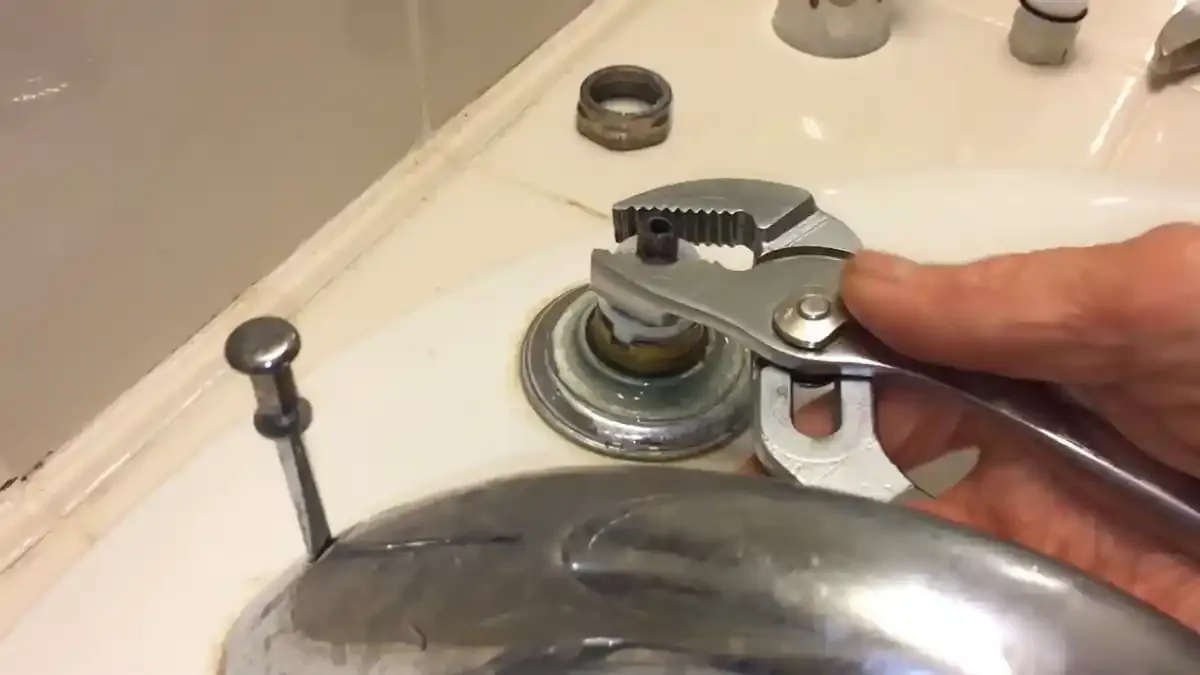
A stem unscrews with a socket or wrench. A cartridge usually has a retaining clip or nut, and then pulls straight out with pliers. Note the orientation before it comes out.
Fit the new part and test
Match the replacement exactly, grease the O-rings with plumber's silicone, reassemble and open the main slowly. Check the spout and the handle for weeping.
What can go wrong during the repair
Stem or cartridge will not budge
Mineral buildup and corrosion can lock a part in place. Forcing it can crack the valve body, which sits inside the wall.
Drip continues with a new part
A pitted valve seat will cut the new washer. The seat may need to be resurfaced or the whole valve replaced.
No access panel behind the wall
Without a panel, replacing the valve body means opening the wall or tile. That is plumbing installation work, not a quick fix.
Handle sticks or sprays sideways
A bent stem, wrong cartridge or worn diverter can cause this. Do not keep forcing the handle.
Tub faucet running and the shutoff will not hold?
Close whatever valve you can, even the house main, and call our 24/7 line. We offer same-day appointments when available and give you a clear price before work starts.
When a plumber is the better choice
Plenty of homeowners handle a washer change. Call a licensed plumber when parts are stuck, when the valve body or seat is damaged, or when you need to open tile. Our faucet repair visits cover stems, cartridges and diverters, though some specialty fixtures need a part ordered. EPA guidelines say to turn off the water line before any faucet repair, so find your fixture stops or main shutoff before you pull a handle.
If the valve is beyond saving, a replacement becomes an installation job. That means matching the new valve to your trim or choosing a new trim set, then restoring the wall around it.
- Ask whether the repair will use the same trim or require a new one.
- Ask about access: a panel on the far side of the wall saves tile.
- Ask whether the water must come off for the whole house or only the bathroom.
- Ask for the repair and the testing to be described before work starts.
Bloomfield, CT: a repair you can usually do without a permit
Bloomfield's Building Division lists permit-exempt work that includes repairing leaks in pipes, valves and fixtures, so long as valves, pipes or fixtures are not replaced or rearranged. A washer, stem or cartridge swap fits that description. The list does not mention faucets by name, so call 860-769-3516 if you are unsure.
Replacing the valve itself or moving it is different, since adding, altering, replacing or relocating supply or drain piping is not exempt. In that case the plumbing work needs its own trade permit and inspection, and your plumber should tell you who is pulling it.
Because the MDC meters every unit of water, test your main shutoff before you start. If it does not close fully, ask the MDC about the meter-side valve before you touch anything on your own side.
Same fix across neighboring towns
We handle tub faucets in Hartford and Simsbury homes as well. Fixture types vary from house to house, so a photo of the handle and the trim helps us bring the right parts.
If your shutoff is stuck or the drip has turned into a stream, Call (860) 397-8103 and we will talk you through the safest next step.
Tub faucet repair questions
Bloomfield's exempt-work list covers repairing leaks in valves and fixtures when nothing is replaced or rearranged. Swapping a washer, stem or cartridge fits. Replacing or moving the valve or piping needs a plumbing permit, so call the Building Division at 860-769-3516.
A drip that shows up only with hot water usually means the worn washer, seat or cartridge is on the hot side. Replace the part on that handle and test again.
A stem faucet usually has separate hot and cold handles that turn several full rotations. Cartridge faucets feel smoother with a short throw. Pulling the handle off and looking at the part is the sure way to tell.
Yes. Our line runs 24/7. Close the house main, then call. If the main will not close, find your MDC meter and call us right away.
A faucet that drips once per second wastes more than 3,000 gallons a year, per the EPA. On an MDC meter that is water you pay for, and the seat inside the valve wears faster the longer it drips.
Yes. If water runs from the spout while the shower head is on, the diverter gasket or the diverter spout is usually worn. That is a spout repair, not a valve repair.