
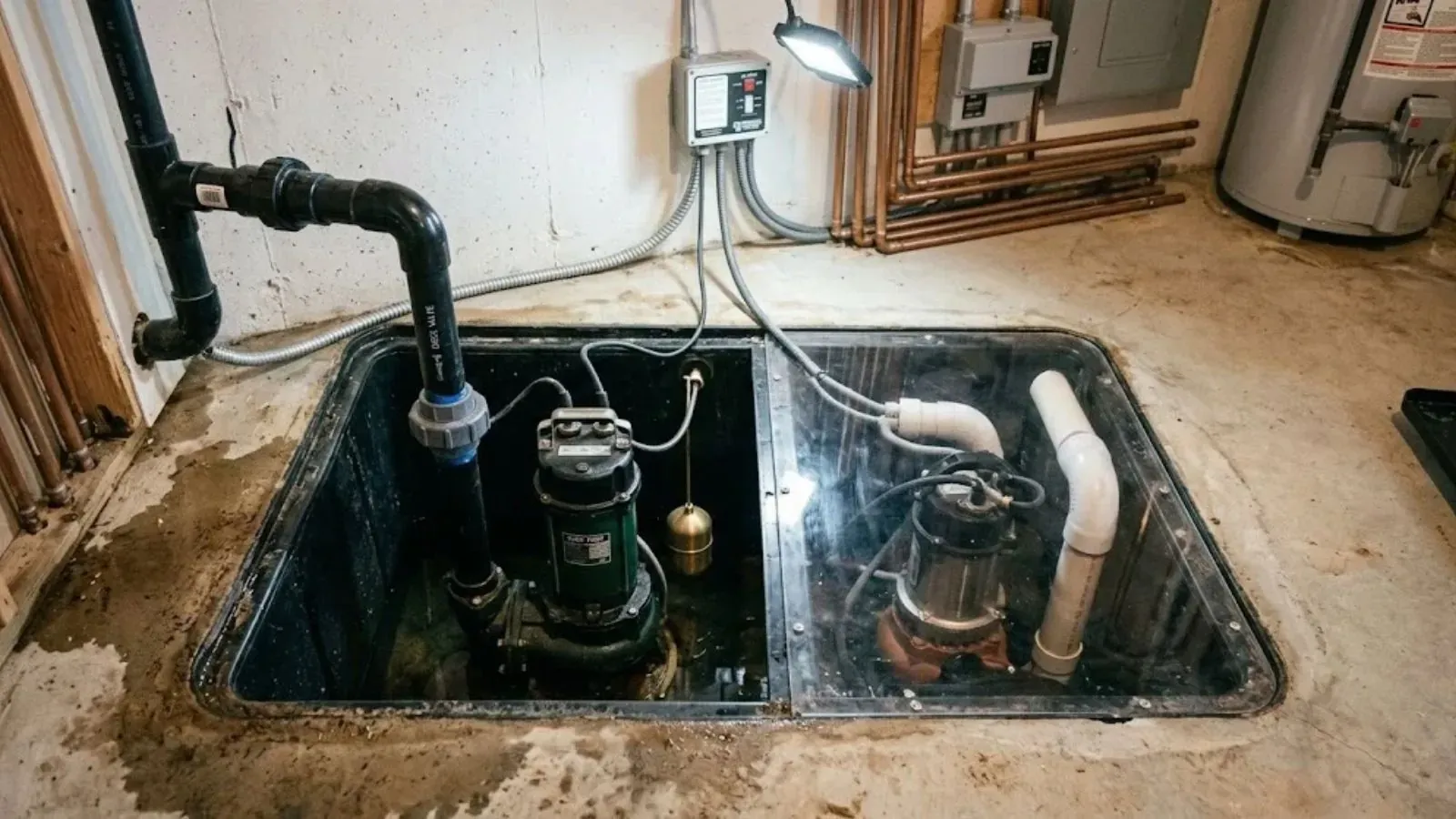
Sump pump or sewage pump: which do you need?
The two pumps share a look and a home in the basement, and homeowners mix them up all the time. A sump pump moves clear groundwater. A sewage ejector pump moves wastewater and solids from a toilet, shower or sink that sits lower than the gravity drain line.
| Feature | Sump pump | Sewage ejector pump |
|---|---|---|
| What it moves | Groundwater and rain seepage | Toilet waste, shower and sink water |
| Basin | Open or lidded pit in the floor | Sealed, gasketed lid with a vent |
| Where it discharges | Outdoors or a storm drain | Into the home's drain line to the sewer |
| Handles solids | No | Yes, built to pass them |
| Related service | Waterproofing and flood control | Basement bathroom plumbing |
Mixing them up causes real harm. Sending sump water into the house sewer is not allowed by the local sewer ordinance, and a sump pump put on a toilet will clog and leak. If you want a basement bathroom, you need the ejector, and our sump pump installation and repair team installs both types.
Why a basement bathroom needs a pump at all
Drains rely on gravity and a downward slope. A basement bathroom often sits below the pipe that leaves the house, so waste cannot run downhill to the sewer. The ejector collects waste in a basin and pushes it up and out under pressure, then lets gravity take over.
Some basements have a floor drain or a laundry drain already roughed in below grade. These can use the same basin if the pump is sized for them. A plumber checks the lowest fixture and the height of the main drain to size the system.
The parts of a proper installation
Sealed basin
A lined pit set below the slab that holds waste until the pump starts. The lid seals with a gasket so sewer gas stays out of the room.
Check valve
Placed on the discharge line so waste cannot flow back into the basin after the pump shuts off. A stuck or worn valve causes short cycling and noise.
Vent line
A pipe that lets air in and out of the basin as the water level moves, and carries gas outside. Without it the pump struggles and traps can lose their seal.
High-water alarm
A float switch and a loud alarm that warns when the basin is filling because the pump failed or stuck.
The pump itself sits inside the basin on a float or pressure switch. When waste reaches a set level, the switch starts the motor, and the pump pushes it up the discharge pipe through the check valve to the main drain. When the level drops, the pump stops.
Basement toilet backing up?
If a basement toilet or floor drain is overflowing, stop using every fixture and keep out of the water. Our 24/7 line dispatches a licensed plumber, and same-day appointments are available when the schedule allows. Wear gloves and avoid contact until it is cleaned.
How the installation unfolds
Plan the layout
A plumber chooses where the toilet, shower and sink will go and where the basin sits. The location decides the length of the vent and discharge line.
Break the slab and set the basin
A section of floor is cut, the pit is dug and the sealed basin is set level. The drain pipes from the fixtures are connected to its inlets.
Run discharge and vent
The discharge line rises to the house drain with a check valve fitted. The vent line runs to the building's venting or to the outdoors, as the plumber and inspector agree.
Patch, wire and test
The slab is patched. The pump is wired to a safe, protected outlet, the alarm is installed and the system is tested with water.
Permit and rules in Bloomfield
Bloomfield's Building Division says adding, altering, replacing or relocating supply or drain piping is not exempt from permits. It also requires a plumbing trade permit application separate from the building permit. We could not find an ejector-specific rule, so we do not cite one. according to MDC ordinance S2l, storm water, subsoil drainage and groundwater are barred from the sanitary sewer, so a sump pump must discharge to the yard or a storm line and never into the sewer.
Bloomfield, CT: sump pumps and ejectors are not the same job
In Bloomfield a sump pump must discharge outdoors or to a storm drain, because MDC ordinance S2l bars groundwater and subsoil drainage from sanitary sewers. A sewage ejector is the opposite: it is meant to connect to the home's drain line and send waste to the sewer.
A basement bathroom adds new drain piping, so it triggers a plumbing permit and inspection. The Building Division books inspections 48 hours ahead and says most permits issue about 10 days after plans are submitted. Call 860-769-3516 early, and ask your plumber who pulls the permit.
If the line outside your house backs up, the lateral is yours and the MDC main is the MDC's. The MDC Command Center answers at 860-278-7850, option 1, for sewer backups. Call it before hiring anyone to work in the lateral.
Our sewer line repair crews see the other end of this story: a lateral that is cracked, rooted or belly-sagged makes any basement drain, pump or not, back up first. If your basement has a history of backups, have the lateral looked at with a camera before spending money on a bathroom.
Keeping an ejector pump working
Ejector pump care checklist
These habits protect the pump and lower the chance of a messy failure.
- Flush only toilet paper, as the EPA advises. Wipes, floss and feminine products jam pumps.
- Never pour grease down any drain, since the MDC names grease as a leading sewer problem.
- Test the alarm when you change smoke detector batteries.
- Listen for the pump running too often or humming without moving water.
- Keep the basin lid sealed and the area around it clear.
- Plan on replacing an aging pump before it fails, not after.
- Know where the breaker is so you can cut power safely.
A power outage stops the pump, and a heavy storm often brings both an outage and extra water. A battery backup helps for a sump pump, but an ejector's basin has only a limited holding volume, so limit water use during an outage.
What shapes the cost of an ejector install
Prices change with the layout and the floor, not only with the pump.
Ask your insurer about sewer backup. Typical homeowners policies cover sudden and accidental damage, not wear, and sewer backup often needs a separate endorsement.
Call (860) 397-8103 for a clear price before work starts.
We serve basements across Hartford and Windsor too. Older homes in either town may have shallow sewer connections that change the pump size, so a visit comes before a quote.
Sewage pump questions
A sump pump removes clear groundwater and discharges outdoors. A sewage ejector pump moves toilet and drain waste to the home's main drain. They use different basins and different discharge paths.
Yes. The basin needs a vent so air moves as the water level changes and sewer gas goes outside. A plumber routes the vent so it meets the plumbing code.
It keeps waste from flowing back into the basin after the pump stops. Without it the pump would restart often and the basin would not empty.
Only if the fixtures sit above the drain line leaving the house so gravity works. Most basement bathrooms sit below it, so they need an ejector.
Adding drain piping needs a plumbing permit and inspection. Call the Bloomfield Building Division at 860-769-3516, and ask whether your project needs a separate building permit as well.
Yes. Our 24/7 line takes calls for failed pumps and basement backups. Stop using the bathroom, keep out of the water, and call. Same-day appointments are available when the schedule allows.