
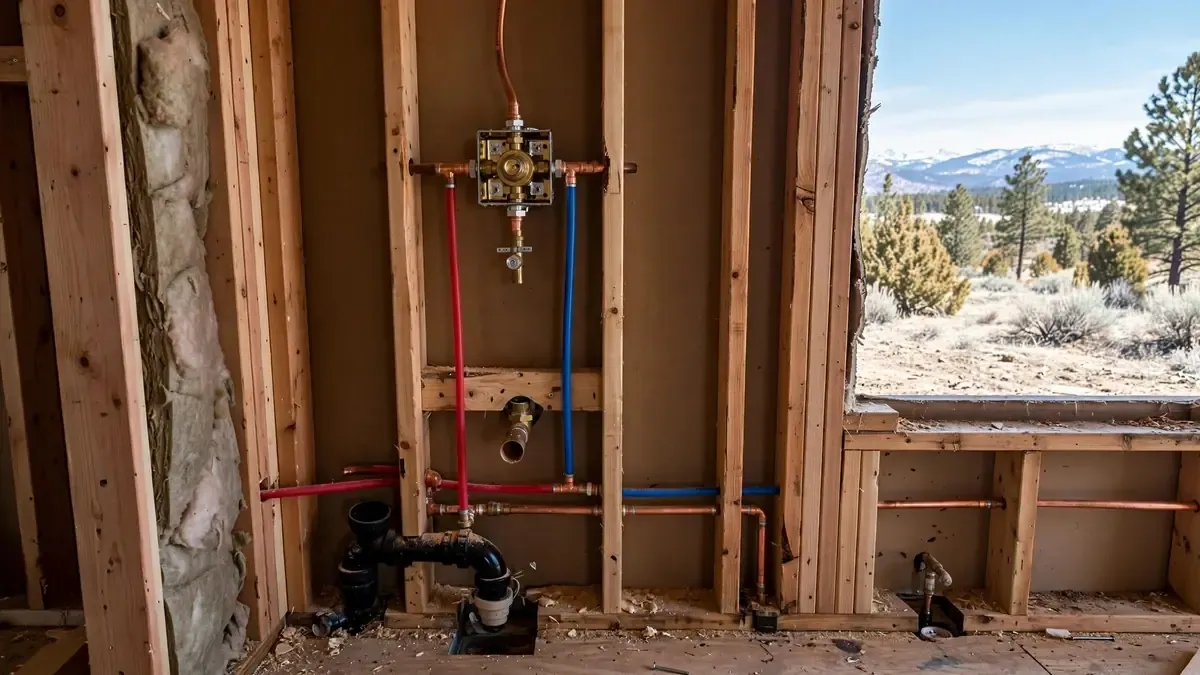
The four parts hiding inside a shower wall
A finished shower looks simple. A handle, a showerhead and a drain cover are all you see. Behind the tile sits the part that decides whether the shower works for twenty years or fails in two.
Supply lines
Hot and cold pipes run from the main branch to the valve body. Copper and PEX are both common in Connecticut homes, and the right choice depends on the wall and the existing system.
Valve body
This brass or plastic housing mixes hot and cold water. The trim you choose later (handle and plate) bolts onto it, so the body must be set at the correct depth before the wall is closed.
Drain and trap
The drain carries used water away. The trap holds a plug of water that blocks sewer gas from rising into the bathroom.
Vent
A vent pipe lets air into the drain system so water flows freely and the trap keeps its seal. A shower without proper venting gurgles and drains slowly.
Each part depends on the others. A valve set too deep will not accept the trim plate. A drain without a vent sounds like a bubbling straw. Planning all four together is cheaper than fixing one after the walls are finished.
Picking the right shower valve
Most people choose a handle for looks and leave the valve to the plumber. That is backwards. The valve decides how steady the temperature stays when someone flushes a toilet or starts the dishwasher, so decide on it first.
| Valve type | What it does | Best fit |
|---|---|---|
| Pressure-balancing | Shifts to offset sudden pressure drops on the hot or cold line | Most standard bathrooms and budget-conscious remodels |
| Thermostatic | Holds the temperature you set, even as supply pressure changes | Homes with body sprays, rain heads or several outlets running together |
| Diverter or volume add-on | Splits flow between a showerhead, hand shower and other outlets | Showers with more than one spray point |
Thermostatic valves usually need more wall depth and a bigger valve body. Check the manufacturer's rough-in sheet before you buy trim. Every brand publishes one, and the plumber sets the body to match it.
Rough-in: the stage where measurements matter
Rough-in is the plumbing done while the studs are still open. It is the cheapest time to change your mind. After tile goes up, every adjustment means cutting into finished work.
- Valve height: set by the manufacturer's sheet and by who will use the shower, since a tall household and a child need different handle positions.
- Showerhead arm location: marked on the framing before the supply stub goes in.
- Blocking behind the wall: solid wood added where grab bars or a fixed glass panel will mount later.
- Stop valves or access: a panel on the far side of the wall lets a plumber reach the valve without breaking tile.
- Pipe support: straps or clips that keep the lines from rattling when water hammer hits.
The access panel deserves a second look. Valve cartridges wear out, and a shower with no access means demolition for a ten-minute part swap. A panel in a closet or the next room costs little at rough-in.
Drain, trap and vent: where most shower problems start
Every shower drain needs a trap directly below it, and the trap must connect to a vented drain line. The vent can run through the wall and up to the roof, or tie into an existing vent nearby if the layout allows. Distance and pipe size between the trap and the vent are controlled by code, so the plumber measures before cutting.
Tiled showers add one more layer. The floor has to slope toward the drain, and a waterproof membrane under the tile keeps moisture out of the framing. Many installers flood the finished pan with water for a set time before tiling to confirm it holds. Ask your contractor whether they do that test.
Slow drainage in a brand-new shower usually points to a venting or slope mistake, not a clog. If you already have a shower that backs up, our guide to drain cleaning explains how a plumber separates a hair clog from a layout fault.
Do you need a permit for shower plumbing?
In Bloomfield, the answer depends on what you change. Stopping a leak or repairing a fixture does not need a permit as long as valves, pipes and fixtures are not replaced or rearranged. Adding, altering, replacing or relocating supply or drain piping does.
Plumbing work gets its own trade permit application, separate from any building permit for the remodel. The town enforces the 2022 Connecticut State Building Code, which is built on the 2021 International Plumbing Code (IPC). An inspector checks the work before the wall is closed, so schedule rough-in inspection ahead of the drywall crew.
Before the walls get closed up
Run through this list with your plumber after rough-in and before any drywall or backer board goes up.
- The valve body is set to the manufacturer's depth for your chosen trim.
- Supply lines are pressure tested and held steady with no drop on the gauge.
- The drain trap is directly below the shower drain and connected to a vent.
- Pipes are strapped so they cannot knock against studs.
- An access panel or service route is planned for the valve.
- The plumbing inspector has signed off, if the job needed a permit.
- Photos of the open wall are saved for future repairs.
What you can do and when to call a plumber
Replacing a showerhead, swapping trim on an existing valve or fixing a dripping handle are reasonable homeowner jobs. Shut off the water at the main first. If a drip comes from the handle area, faucet repair often fixes it with a new cartridge.
Call a licensed plumber when the job involves cutting into the wall, moving the valve, changing the drain location or adding a second showerhead. These are the jobs that trigger a permit and an inspection. Connecticut licenses plumbing work by scope, and your contractor should be able to tell you which license covers the job.
If you are building a new bathroom or relocating a shower, our team handles this under plumbing installation, from rough-in to final trim.
What changes the cost of shower plumbing
Prices vary too much to quote fairly without seeing the wall. These are the drivers that move the number up or down.
Moving versus replacing
Swapping a valve in the same spot is far simpler than relocating the shower to a new wall, which means new supply runs and a new drain path.
Valve type
A thermostatic valve with several outlets costs more in parts and takes longer to set than a basic pressure-balancing valve.
Floor access
A first-floor slab shower is a different job from a second-floor shower with a joist bay below it. Slab work may mean cutting concrete.
Permit and inspection
When the job needs a trade permit, the permit fee and the inspection scheduling are part of the project timeline.
Existing pipe condition
Old galvanized or corroded supply lines may need replacing back to a larger branch so the new valve gets steady flow.
We give a clear price before work starts, and the number reflects the actual wall and floor, not a guess from a photo.
Bloomfield, CT: what to know before you open the wall
The Bloomfield Building Division inspects plumbing, electrical, mechanical and building work, and it enforces the 2022 Connecticut State Building Code. In practice, that means a shower that moves or gets new drain piping needs a plumbing permit and an inspection, and you can reach the office at 860-769-3516 to schedule.
The town's own permit page says most permits are issued about 10 days after plans are submitted, and inspections need 48 hours of notice. Build that lead time into your remodel calendar, because the tile crew cannot start until the plumbing passes.
The shower valve type and drain size rules sit in the International Plumbing Code as the state adopts it. We do not quote those sections from memory, so ask the Building Division or your plumber to confirm the detail for your layout.
Homeowners in nearby towns ask the same questions
Remodels across the Capitol Region run into the same valve and drain decisions. If you live in West Hartford or Avon, the same rough-in questions apply, and our dispatch covers both towns. Your own town may have different permit steps, so confirm them with its building office before work starts.
Shower plumbing questions we hear
Yes, in most cases. Bloomfield treats adding, altering, replacing or relocating supply or drain piping as work that needs a plumbing trade permit and an inspection. Repairing a leak in an existing valve or fixture, without replacing or rearranging pipes, is on the town's exempt list. Call the Building Division at 860-769-3516 with your specific plan.
Usually yes, but it depends on where the nearest drain and vent are. The farther the shower sits from the existing stack, the more pipe has to be added, and long runs need careful venting and slope. A plumber checks the distance and the floor structure before quoting.
A straightforward replacement in the same spot is often done in a day. Moving the shower, opening a floor or cutting concrete takes longer. Permit and inspection scheduling add calendar time even when the plumbing itself is quick.
A pressure-balancing valve reacts to a sudden pressure drop on one line by adjusting the other, which helps prevent scalding or chilling. A thermostatic valve holds the temperature you set. Thermostatic is a better match for showers with several outlets.
A slow new shower drain is usually a venting or slope issue, not a clog. Check for gurgling in nearby drains. A plumber can confirm with a camera or a flow test and correct the layout before the problem damages the tile.
The Bloomfield Building Division at Town Hall, 800 Bloomfield Avenue, takes inspection appointments at 860-769-3516. The town asks for 48 hours of notice. Your plumber normally books it, but you can call to confirm the date.