
Why plain toilet paper still causes a clog
Toilet paper is made to break apart in water, but it needs time and water volume to do it. A thick wad dropped in a bowl that flushes weakly can lodge in the curved passage right behind the bowl. The next flush then stacks more paper on the first plug.
Quilted, extra-thick and "ultra" rolls take longer to soften than thin single-ply paper. Add a child who unrolls half a roll, and you get a dense mass that a modest flush cannot move. The paper alone is rarely the whole story. Water volume and bowl design matter just as much.
The EPA says only toilet paper belongs in a toilet, and that wipes go in the trash. That advice is the first thing to check after a clog. A few flushable-labeled wipes mixed with paper can turn a soft plug into a stubborn one.
Low-flow toilets and clogs
Newer toilets use less water per flush, and that is good for your water bill. The tradeoff is less push through the drain. A low-flow bowl that is working properly clears normal use without trouble, but it has little margin for a heavy load of paper.
Weak flushing has other causes too. Mineral buildup can partly block the small jets under the rim, a worn flapper can leak and shorten the flush, and a low tank water level gives the bowl less force. These are repairs, not clogs, and a plunger will not fix them. Our toilet repair visits cover these tank and flush problems along with stoppages.
Flush too weak
Water swirls slowly and the bowl barely empties. Check the tank level and the flapper before you blame the paper.
Bowl fills then drains slowly
A partial clog in the trap. Plunging often clears it, and a slow drain after plunging means an auger is next.
Bowl rises to the rim
A full blockage. Do not flush again. Lift the tank lid and push the flapper down to stop the refill.
How to plunge a toilet the right way
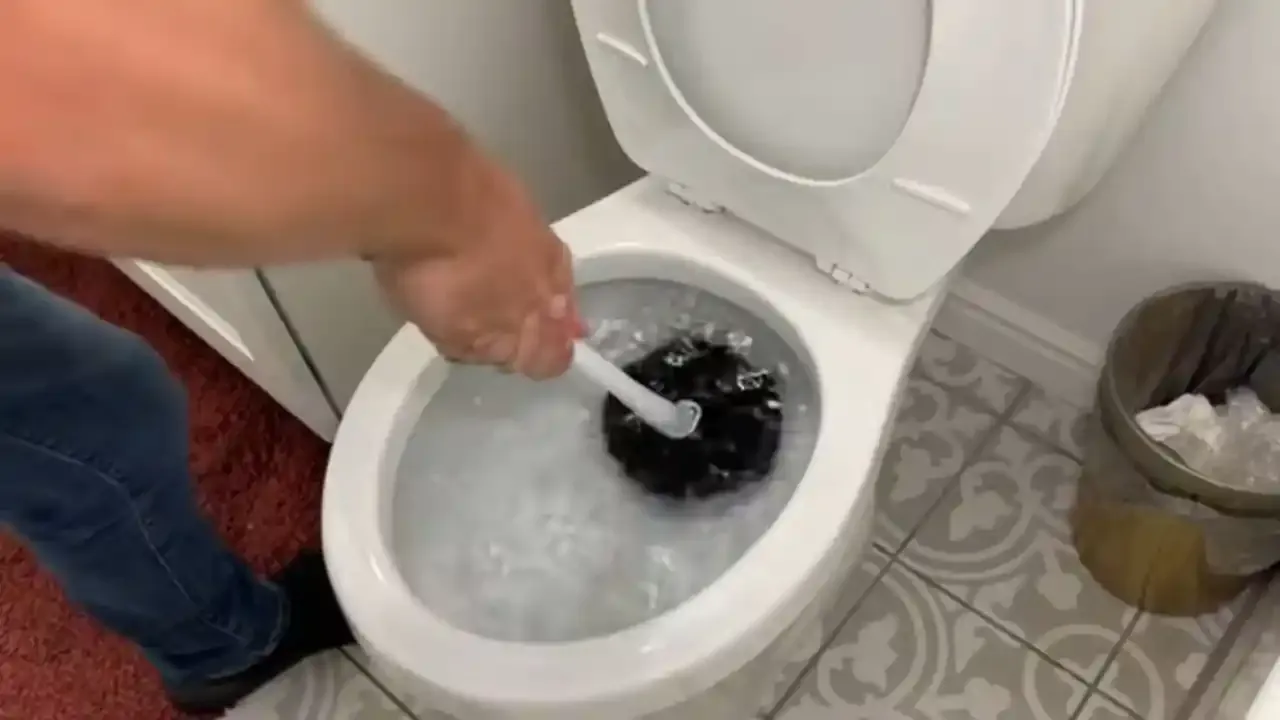
Use a flange plunger, the kind with a soft rubber sleeve that folds out of the cup. A flat sink plunger seals poorly on a toilet drain. Before you start, put towels or newspaper on the floor, and if the bowl is nearly full, bail a little water into a bucket.
Seal the cup
Set the plunger over the drain opening with the flange inside it. The cup should be covered by water so it pushes water, not air.
Push gently first
The first push should be slow to force the air out. A hard first stroke can splash dirty water onto the floor.
Plunge ten to fifteen strokes
Keep the seal and pump steadily. The pull stroke does much of the work because it tugs the plug back toward the bowl.
Test with a small flush
Pour a bucket of water into the bowl instead of using the handle. If it drains fast, the clog is gone. If it rises, stop and try again or move to an auger.
Skip chemical drain openers in a toilet. They sit in the bowl without reaching the clog and can splash on your skin or damage fittings. If the plunger fails after two or three rounds, a toilet auger is the better next tool.
When a toilet auger is the next step
A toilet auger, also called a closet auger, is a short cable inside a rigid tube with a curved tip made for the bowl's built-in trap. The tube protects the porcelain from scratches. You feed the cable in, crank the handle, and either hook the clog or break it apart.
An auger works well on a paper plug, a lump of wipes, or a toy. It struggles with objects far down the line, and forcing it can scratch the bowl or kink the cable. If the cable runs in several feet without meeting anything, the blockage is probably past the toilet itself.
| Situation | Try first | Call a plumber when |
|---|---|---|
| Slow drain, bowl still empties | Flange plunger | It returns within a day |
| Bowl full, no obvious object | Plunger, then closet auger | Auger will not pass or gets stuck |
| Toy or hard object flushed | Stop flushing, do not force it | Right away, before pulling the toilet |
| Clog returns every few weeks | Check wipes and flush strength | A camera inspection can show what is causing it |
| Gurgling in tub or sink too | Do not keep flushing | Main line signs, see below |
Signs the main line is the real problem
A clog in one toilet stays in one toilet. When the trouble shows up in more than one fixture, the blockage is downstream of all of them, in the main drain or the line that runs out to the street. According to MDC's sewer ordinance, rags and anything likely to cause an obstruction are barred from the public sewer, so wipes belong in the trash.
Signs of a main line problem
Two or more of these together point away from a single toilet clog.
- Flushing the toilet makes the tub or shower drain gurgle or bubble.
- Water backs up in a basement floor drain after you run the washer.
- More than one toilet clogs in the same week.
- Plunging moves water but the bowl refills right back to the same level.
- A sewer smell comes from floor drains or the basement.
- Sinks drain slowly even after you clear their traps.
- The problem returns within days after a plunger or auger clears it.
Water coming up where it should be going down?
If a toilet overflows, or sewage appears in a tub or floor drain, stop using every fixture and call. Our 24/7 line sends a licensed plumber for drain cleaning and main line clogs, and same-day appointments are available when the schedule allows.
What a plumber does that a plunger cannot
When the clog is past the toilet, a plumber uses a longer drain cable or a drain camera to see what is in the pipe. A camera shows whether the cause is grease, roots, a sagging section, or a crack. That tells you whether a cleaning is enough or whether a repair is coming.
The same reasoning applies to repeat clogs. If a toilet clogs every few weeks with normal use, the cause is rarely the paper. A partial blockage deeper in the line, or a toilet that is not flushing as designed, is more likely. Cleaning the line and checking the toilet's flush solves what plunging keeps missing.
What affects the cost of a toilet clog visit
A clog call is priced by the work involved, and you hear the price before work starts.
Ask your insurer about backup coverage. Typical homeowners policies cover sudden and accidental damage, not wear, and sewer backup often requires a separate endorsement.
Call (860) 397-8103 and we will explain the likely scope and give a clear price before work starts.
Bloomfield, CT: what MDC customers should know
Bloomfield is one of eight MDC member towns, and the MDC handles the main sewer. The homeowner owns the lateral, the pipe from the house to the street main. So a toilet that keeps clogging may be a lateral problem, and that part of the line belongs to you.
Call the MDC Command Center at 860-278-7850, option 1, before you hire anyone for work in the lateral. The MDC says it may issue a form if the blockage is in the lateral, and it will not accept liability for work done without a call first.
The MDC sewer ordinance also bars rags and anything likely to cause an obstruction. Wipes and paper towels are the usual culprits, so bin them instead of flushing. Bloomfield's sewer system is about 114 miles of pipe, and roughly a quarter of it is over 50 years old, which is a good reason to keep the lateral free of anything but paper.
How to keep toilet paper from clogging again
- Flush twice for a large amount of paper instead of once.
- Switch to a thinner paper if the toilet is low-flow and clogs often.
- Put wipes, floss, paper towels and feminine products in a trash can, as the EPA advises.
- Keep a flange plunger next to the toilet so a clog gets handled before it spreads.
- Fix a running or weak-flushing toilet early, since weak flushes cause repeat clogs.
- Teach children that toilet paper goes in small amounts.
If your toilet clogs in a home with a basement bathroom, the drain may run into an ejector basin instead of a gravity line. That is a different system with its own pump, and a plumber should check it. Older cast iron lines also develop rough interiors that catch paper, so age of the pipe matters as much as the toilet.
We serve homes next to Bloomfield too. A clog call from West Hartford or Avon gets the same step-by-step approach, plunger and auger first, line cleaning if the signs point there.
Toilet paper clog questions
Yes. Too much paper in one flush, thick quilted paper, or a weak flush can leave a mass in the trap. Plunging usually clears it. If the paper is not the cause, check for wipes or a weak flush.
The EPA says only toilet paper should be flushed and wipes belong in the trash. Wipes do not break apart like paper and often cause clogs in the toilet or the lateral.
Try two or three rounds of ten to fifteen strokes. If the bowl still will not drain, use a closet auger. If that fails or other drains are slow, call a plumber.
A properly working low-flow toilet handles normal use. It has less margin for heavy paper loads, so flush twice for large amounts and fix any weak flush.
In Bloomfield the MDC maintains the main sewer and the homeowner owns the lateral from the house to the main. Call the MDC at 860-278-7850, option 1, before work starts, because the MDC says it may issue a form for lateral blockages and will not accept liability for work done without a call.
Yes. Our emergency line runs 24/7. If a toilet is overflowing, shut the water valve behind the toilet, stop flushing anything, and call. Same-day appointments are available when the schedule allows.