
What actually happens in the pipe
Vinegar is a mild acid. Baking soda is a mild base. Pour them together and they fizz, producing carbon dioxide gas, water and a salt. The bubbles look dramatic, but the reaction is over within a minute or two.
That fizz can dislodge a thin film of soap scum or loose debris near the drain opening. It does not dissolve a wad of hair, and it does not cut through a hardened plug of cooking fat. After the reaction finishes, what remains in the pipe is mostly warm, slightly salty water.
We could not find a government or utility source that tests this mixture on household clogs, so we treat it as a light maintenance habit, not a repair. Treat any claim that it clears serious blockages with caution.
A fair way to try it
Clear the standing water
Bail out any water sitting in the sink or tub so the mixture can reach the clog area instead of floating on top.
Add baking soda first
Pour about half a cup into the drain. Use a spoon or funnel to push it down so it does not stick to the sides.
Follow with vinegar
Pour in about a cup of white vinegar. Cover the drain with a plug or wet cloth for a few minutes while it fizzes.
Flush with hot water
Run hot tap water for a minute or so. Skip boiling water in a plastic trap or with a cracked porcelain fixture, since the heat can damage them.
Run the tap afterward and watch how the water leaves. If it drains at its normal speed, you cleared a light film. If water still pools, one repeat is fine, and a second failed try means the blockage is something else.
Clogs the mixture cannot fix
| Problem | Will it help? | Why |
|---|---|---|
| Thin soap film, mild odor | Sometimes | The fizz and rinse loosen residue near the opening |
| Hair clump in a tub or shower drain | Rarely | The mixture does not break down a tangled mat, so lift it out with a drain tool |
| Cooking grease in a kitchen line | No | Cooled fat sticks to pipe walls and needs hot mechanical cleaning |
| Toy, wipe or object caught in a trap | No | A physical obstruction has to be removed |
| Roots or a cracked lateral | No | The pipe itself is the problem, not what flows through it |
Kitchen lines deserve special mention. The Metropolitan District Commission, which provides sewer service to Bloomfield, names grease as the blockage problem and tells residents to keep cooking oil and fat out of sinks. Vinegar does not dissolve a grease plug once it has cooled and hardened inside the pipe.
A better approach before reaching for chemicals
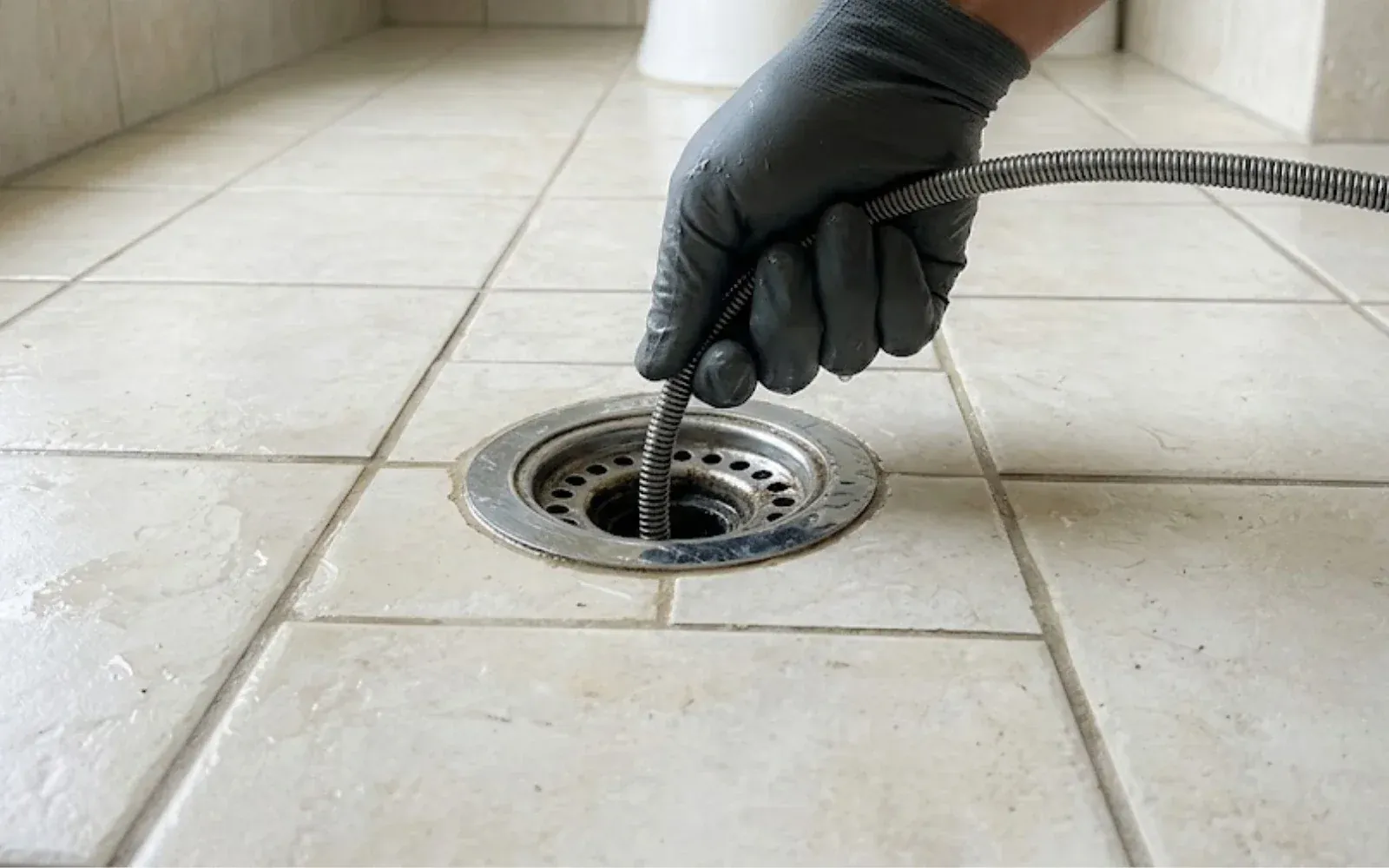
A plunger, a hand-held drain snake or a plastic hair-catching strip handles most household clogs without any liquid. Pull the stopper on a bathroom sink and remove the hair that wraps around it. That single step explains more slow drains than any pipe problem.
Federal guidance for homes on septic systems steers owners away from strong chemical openers and recommends boiling water or a snake instead. The same common sense applies to any household. Harsh products can irritate skin and eyes, and mixing different cleaners can release dangerous fumes. If you try a commercial product, read the label and do not combine it with anything else.
Habits that keep drains moving
These cost almost nothing and prevent most calls.
- Wipe greasy pans with a paper towel and put it in the trash, not the sink.
- Use a mesh strainer in every shower and tub drain.
- Flush only toilet paper. Wipes belong in the trash even when the package says flushable.
- Run hot water for a short time after washing dishes.
- Pull the stopper and clean the bathroom sink every month or two.
- Watch for gurgling, which signals a blockage building farther down the line.
Signs the problem is bigger than one drain
A clog in a single fixture is a local problem. If two or more fixtures slow down at the same time, or water bubbles in a toilet when the washing machine drains, the blockage is probably in the main drain or the sewer line. No amount of fizzing at the sink reaches that.
A basement floor drain that backs up, a sewage smell in the yard or a toilet that keeps clogging after plunging are the same warning. Stop using water in the house and call for help. For repeated trouble in the main line, our sewer line cleaning work uses a cable machine or a hydro jetter, and a camera shows what the cleaning found.
What a plumber does that a home mix cannot
A plumber starts by locating the clog. Fixture traps are cleared with a hand auger or a small cable machine. Larger lines call for a cable with cutting heads, or for a jetter that blasts grease and scale from the pipe wall.
A drain camera finishes the job by showing whether the pipe is clean, cracked, offset or invaded by roots. That answer decides whether you need a one-time cleaning or a repair. Our team explains this under drain cleaning so you know what you are paying for.
What changes the cost of a professional clearing
Where the clog sits
A trap under one sink is quick to reach. A blockage deep in the main line needs more cable, more time and sometimes a camera.
What the clog is made of
Hair and soap clear faster than hardened grease or tree roots, which need cutting or jetting.
Access to the line
A cleanout fitting makes entry easy. Without one, the plumber may need to pull a toilet or work from a roof vent.
Time of the call
A sewage backup at night is handled differently from a scheduled weekday appointment, and we give a clear price before work starts.
Many homeowners policies cover sudden and accidental damage, not wear or gradual leaks, and sewer backup often needs a separate endorsement. Ask your insurer before a backup happens, not after. According to the Connecticut Insurance Department, standard homeowners policies exclude flood, and sewer backup often needs separate coverage.
Bloomfield, CT: what MDC customers should know
Bloomfield is one of eight MDC member towns, and the district handles wastewater treatment. The Bloomfield sewer system includes 114 miles of pipe, about a quarter of it more than 50 years old. Older pipe tolerates grease and debris less well, so what you pour down the drain matters more than you might expect.
The homeowner owns the sewer lateral from the house to the street main. If a clog does not respond to cleaning at a fixture, the MDC says to call it before hiring any work on the lateral, because it can tell you whether the blockage is in your pipe or in the main. The MDC Command Center takes sewer emergency calls at 860-278-7850, option 1.
The MDC also asks residents to keep fats, oils and grease out of sinks and toilets. In practice that means scraping and wiping pans rather than rinsing them down the kitchen drain.
The same habits and warning signs apply across the region. Readers in Hartford and West Hartford can call the same 24/7 line when a drain stops responding to home methods.
Drain cleaning questions
Only a light film, and rarely a true clog. Kitchen drains clog mostly with cooled grease, which the mixture does not dissolve. A plunger, a hand snake or a professional cable clears most kitchen blockages.
Occasional use is gentle compared to harsh chemical openers, but we did not find a source that tests it on every pipe material. If your pipes are old, corroded or cracked, skip the experiment and have them inspected.
No. Never combine different cleaning products. Follow the label on a commercial product, use it alone and ventilate the room. If that fails, stop and call a plumber.
If several fixtures back up at once or sewage appears in the basement, the main line or lateral is the likely cause. Call the MDC Command Center at 860-278-7850, option 1, before hiring work on the lateral. The MDC can tell you whether the blockage is in the main.
They act slowly and suit maintenance, not a standing clog. EPA guidance for septic owners calls additive products generally unnecessary. For a stopped drain, a snake or jetter is the reliable fix.
Clear hair from bathroom drains monthly and keep grease out of the kitchen sink every day. If a drain slows down repeatedly in the same place, have a plumber find the cause.